

White eggs on course to match brown within three years, AI projection finds
Published on : 18 Sep 2026
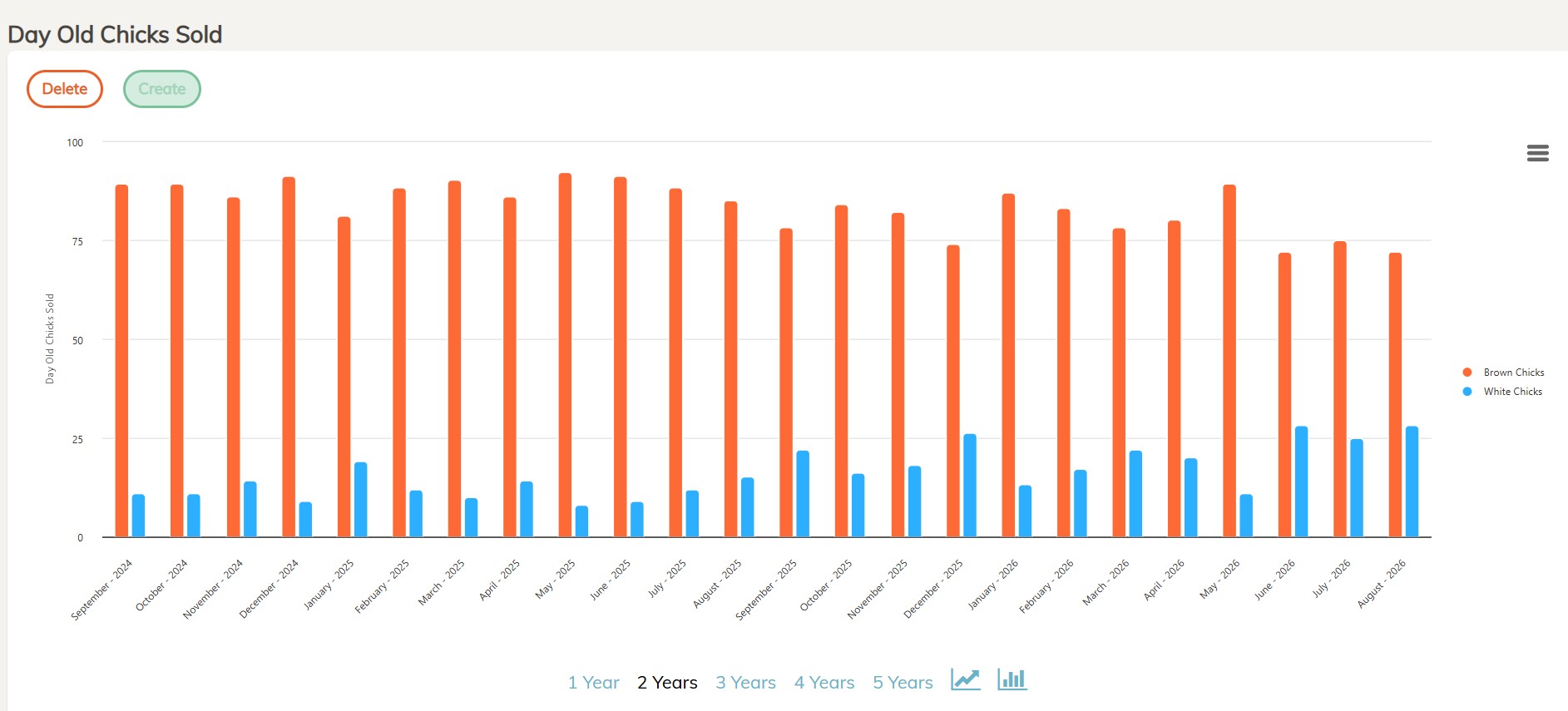 White eggs are on course to account for half of UK output within three years if the shift in day-old chick placements seen in 2026 continues, according to a projection BFREPA asked Anthropic's Claude Fable 5.1 model to run on the monthly brown/white hatchery figures.White birds took 27.5% of day-old chicks sold to pullet rearers in August, up from 6.8% in January 2024. A straight-line fit through the eight months of 2026 puts the white share rising at roughly 1.8 percentage points a month. On placements alone that reaches 50% around September 2027, but the model was asked to take account of lay length: with brown flocks typically depopulated at around 86 weeks and white flocks kept to 105, each white chick placed produces more eggs over its life than each brown one, so white eggs match brown once white birds reach around 45% of placements. On the current slope that arrives around June 2027, with the laying flock and egg output catching up through 2028 as older brown flocks are depopulated.The model flagged chick availability as the binding constraint on that date. Reaching 45% by mid-2027 would require hatcheries to supply around 1.5 million white chicks a month against 0.98 million in August, roughly double this year's white output, whereas white volume has grown at between 37% and 53% a year since 2024, from 3.9 million chicks in 2024 to 6.0 million in 2025 and an annualised 8.2 million this year. At that rate of growth white reaches around 30% of placements in 2027 and crosses the 45% threshold during 2028, with eggs following in 2029. Because white is already the bird producers cannot get, supply can only delay the crossover, not reverse it. The projection also assumes white eggs continue to earn the same price as brown; a white discount emerging once supply catches up with contracted retailer demand would flatten the slope.The speed of the shift will also depend on how quickly colony production, which is almost entirely brown, leaves the market. The housed colony flock has fallen from some 7 million birds in January 2025 to 5.2 million now, a fast run-off driven by the major retailers' decision to stop stocking eggs from caged hens, but with that switch now largely complete any further reduction will depend on a government decision to ban cages. Because colony sites rarely have the land for ranging, the birds that replace them go into barn, which is predominantly white, or do not return at all. Barn has grown from around 2 million housed birds in early 2025 to 3 million now, with capacity for 4.2 million, and much of this summer's rise in white placements coincides with that expansion. Full conversion of the remaining colony flock to white barn would lift the white share of placements by a further seven to eight points and bring the parity date forward by around four months.Current tightness in white pullet supply, driven by stronger demand for white, means the placement figures if anything understate the appetite for white, since producers unable to secure white birds appear in the brown column. Because pullets are ordered a year or more ahead, the placements for the next twelve months are already largely committed.The slower reading, a trend fitted to the whole series since January 2024, puts placement parity nearer 2031, but the June to August white share of 26.7% against 12.0% in the same months of 2025 sits with the faster pace.