

We all eat with our eyes first
Published on : 1 Aug 2026
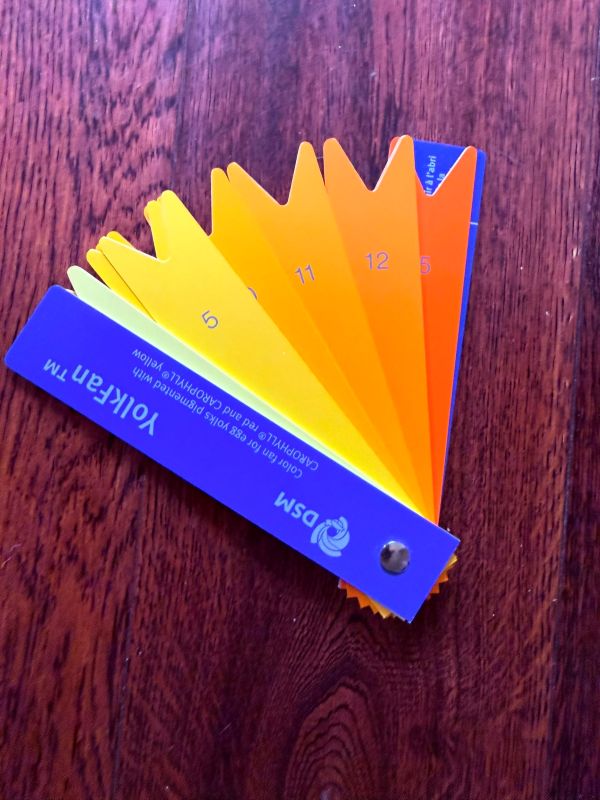 When it comes to eggs, this means people equate yellow or orange yolks with tasty food and healthy hens. When yolk scores drop, consumer complaints go up.Therefore, supermarkets often require the eggs they sell to have yolks that fall within a particular colour range. As yolk colour is largely dictated by what the hens eat, this means that we, as nutritionists, can design the feed to meet those quality parameters.In general, we use a combination of red and yellow pigments – some delivered by raw materials like maize and maize by-products, and some through the addition of individual pigments in the premix.But how do we know which pigments to use, and how much of them? Alongside our commercial experience, we can use data to help us refine our strategies and understand their effectiveness in the field.Yolk score through the yearAnecdotally, we hear that consumer complaints around pale yolks peak in the summer months and decline in winter. The question is: is this true? And if so, why?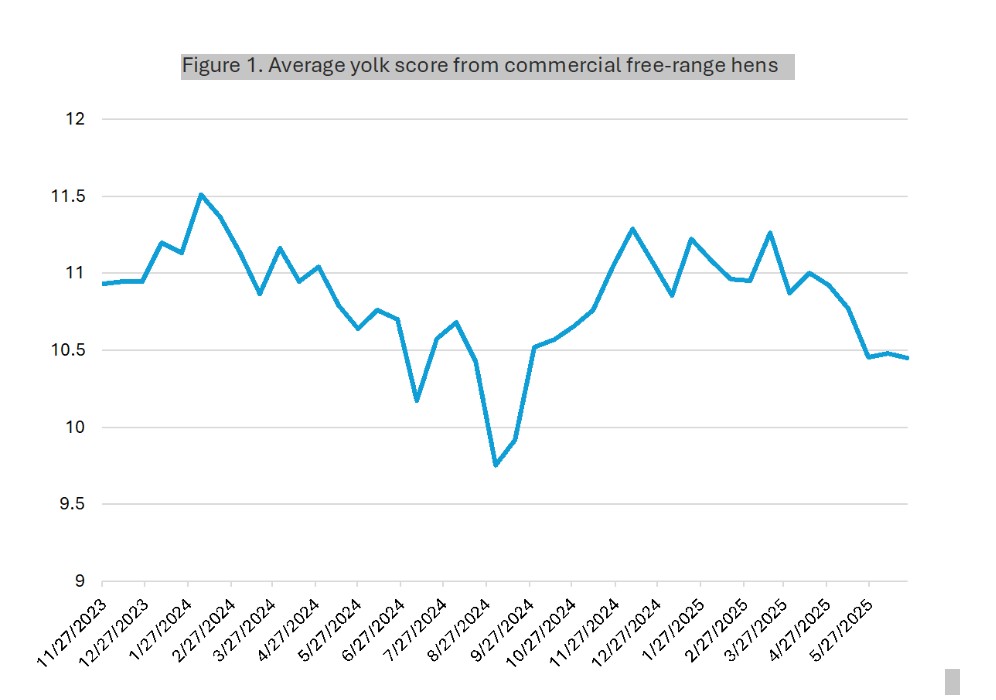
Figure 1. Average yolk score from commercial free-range hens
We looked at a large yolk quality dataset collated from several commercial UK packers. The data covered more than a year’s worth of production across 470 free-range laying flocks – all of whom were fed similar levels of pigments – and represented more than 90,000 individual eggs. Egg yolk colour is commonly scored on a scale of 1 (palest) to 15 or 16 (richest), and this allows us to analyse the average yolk score over time.As shown in Figure 1, there is a clear seasonal effect. In the winter, average yolk score in the dataset sits around an 11. In the spring, when the weather starts to heat up, the score starts to drop. We hit the bottom of the drop in August, before the score climbs back up in September and October.So why does this happen?We have no concrete answer, but several solid theories.Firstly, the spring and summer are hotter than the winter. This means that the pigments in the feed more likely oxidise and lose their efficacy faster. Hot weather also means birds eat less, consuming less pigment from the feed. At the same time grass dries out, losing its lush green colour and providing fewer natural carotenoids to foraging birds.
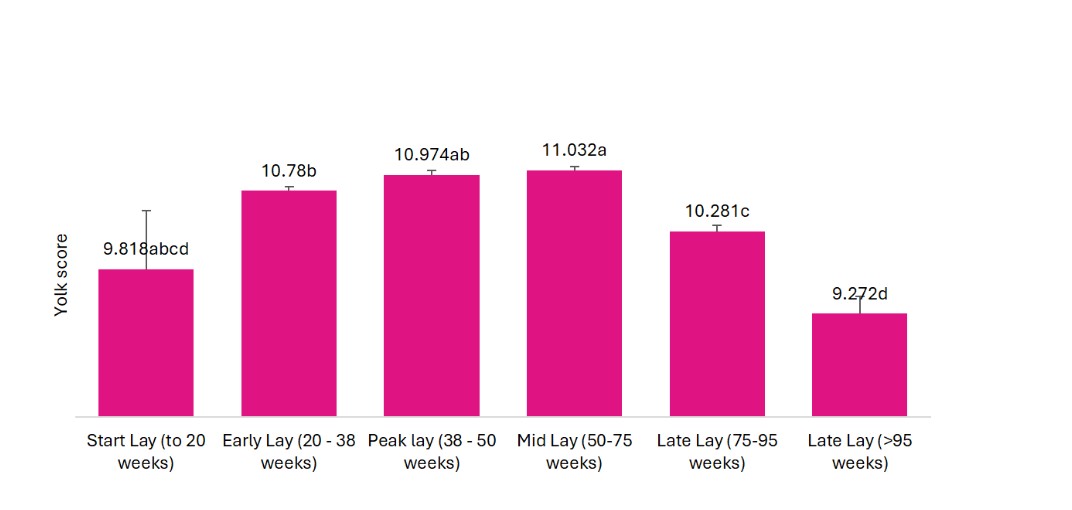
Young birds at the start of lay, lay both lower and more variable yolk scores, as you can see in Figure 2he yolk score stabilises
What happens to yolk score as the bird ages?The time of year is not the only factor that affects yolk pigmentation: the data clearly showed than hen age does as well.Young birds at the start of lay, lay both lower and more variable yolk scores, as you can see in Figure 2. Pigmentation is determined about two weeks before the egg is laid – the yolk develops in concentric layers, taking 14-16 days to fully mature inside the ovary and be released. This means that early eggs laid in a flock before 21 weeks can be influenced by feed intake, composition and stress at transfer.As the birds move through early, peak and mid-lay variation in yolk score reduces, and the yolk score stabilises.In older birds, yolk score seems to decline and become more variable again. This is likely a combination of many things, including larger eggs (and therefore egg yolks) meaning the same pigment intake has to colour more yolk, accumulation of gut health issues in older flocks which can interfere with pigment absorption, and the fact that older birds have lower energy and fat, but higher calcium requirements and the nutritional changes that support this that may reduce deposition efficiency.Turning data into better strategiesNone of these effects happen in isolation. Season, flock age, feed intake, egg size, raw material composition and bird health all impact the amount of pigment that makes it into the yolk.Instead, of a “set and forget” approach to pigment levels in our diets, routine yolk scoring, combined with flock age, season and production records, allows trends to be identified early and pigment programmes adjusted proactively. For example, during the summer months, when feed intake falls and natural carotenoid intake from pasture is reduced, additional pigment supplementation may be needed to maintain target yolk colour. Likewise, as birds move into later lay, increasing egg size and changes in nutrient utilisation may justify revisiting pigment inclusion rates.Commercial nutrition has always relied on experience and expertise, but today's availability of large field datasets gives us another valuable tool. By understanding how yolk colour changes naturally throughout the year and across the laying cycle, we can better predict when problems are likely to occur and design feeding strategies that maintain consistency.Ultimately, consumers judge eggs long before they taste them. Combining practical nutritional knowledge with commercial data allows us to deliver the yolk colour retailers expect, consumers prefer and producers can achieve consistently.Dr Alex WealleansPremier Nutrition