

Watching the meter, missing the band
Published on : 25 Jun 2026
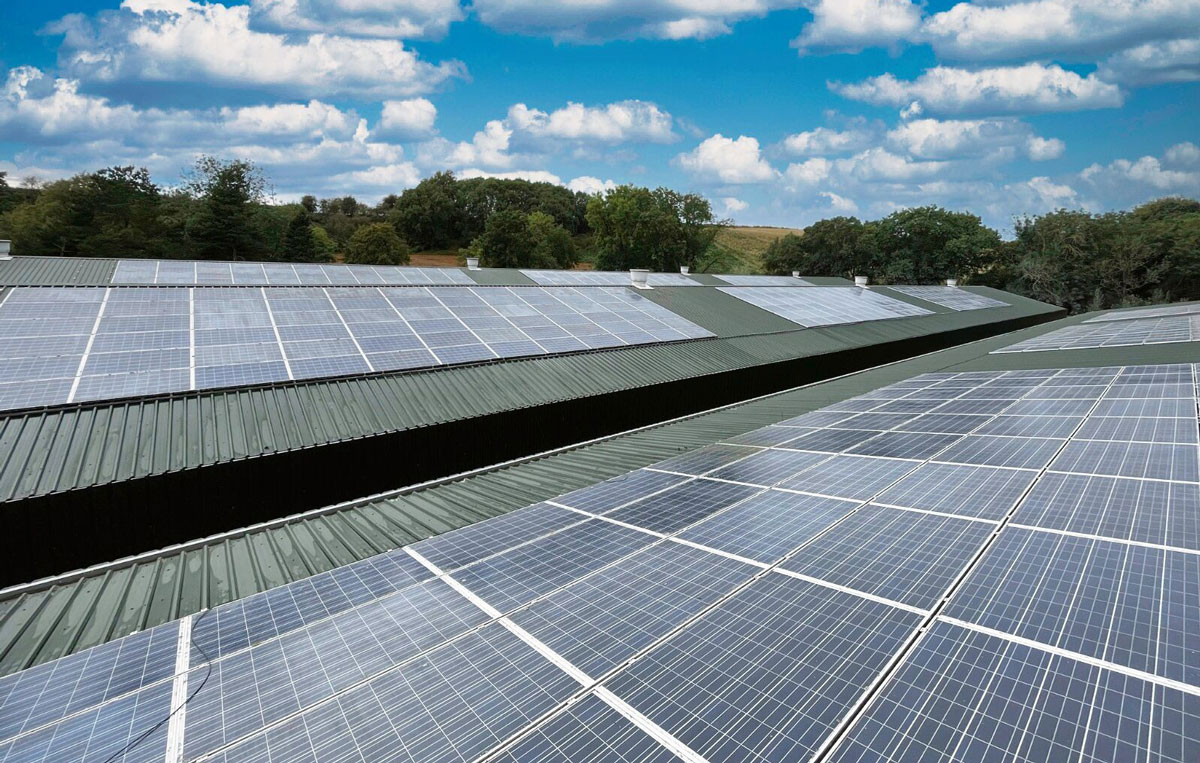
Plenty of producers are turning to solar and battery storage, and rightly so...
A growing share of a farm’s electricity bill is set by the size of its connection, not how much power it uses - and that’s the part producers keep overlooking.Keith Wild joined a discussion with Scott Lapthorne, Trevor Sellers and Joshua Robinson, Assistant Director and Head of Utility Contracts at NFU Energy.There is a hard lesson buried in this year’s energy contracts, and free range producers are learning it the expensive way. You can switch off half the shed, put solar on the roof, run the fans smarter - and still watch the bill go up.Scott Lapthorne, an advisor on the BFREPA board, said at a recent BFREPA discussion that he is already paying around £110 a day simply to stay connected to the grid. Not to run anything. Just to be plugged in. That works out at roughly £40,000 a year before a single fan turns or a grading line starts up.That figure is the clearest signal of where farm energy costs are heading, and why the old habit of ringing round for the cheapest unit rate at renewal is no longer enough on its own.Two bills in oneStart with what an electricity bill actually is, because most of us picture it wrong. We think of it as the cost of the power we use. It isn’t. It’s two things bolted together.The first is the electricity itself - what the industry calls the commodity. The second is everything involved in getting it to you: maintaining the local wires, moving power around the country, keeping the grid balanced minute by minute, supporting renewable schemes, paying generators to sit on standby, funding new nuclear and the next round of grid infrastructure, and the supplier’s own costs and margin on top. These are the non-commodity charges. In plain terms, they are the cost of the system that delivers the power, rather than the power itself.Here is the part that should make every producer sit up. On a typical commercial bill, the electricity - the actual wholesale cost - is barely a third of the total. The rest is the system. And the system is the part that keeps rising. The wholesale price rises and falls with the market, but the charges bolted on top mostly travel in one direction, and several are now climbing far faster than the electricity itself.Joshua Robinson, Assistant Director and Head of Utility Contracts at NFU Energy put real numbers on it. Run the figures for a large poultry operation getting through 175,000 units a year and the electricity itself works out at roughly £12,700. Bolted on top of that: nearly £6,000 a year to the local network, another £5,300 to move power across the country, £4,340 towards the Renewables Obligation - on its own the second-biggest item on the entire bill - and £2,800 simply to keep other generators sitting on standby in case they are needed. Not one of those is the electricity. Every one of them is the system. Whilst some schemes will begin to fall as schemes like FiT (Feed In Tariff) begin to reach the end of the line, future forecast for other schemes continue to rise.“People tend to look at the cheapest price and compare the unit rate,” says Joshua. “What they often don’t see is what’s happening behind the scenes with standing charges, network costs and pass-through charges.”The part you can’t switch offThe most stubborn of those charges is the standing charge: the daily cost of being connected, payable whether you run flat out or shut the doors for a fortnight.To understand why it can run to tens of thousands a year, you have to separate two things that sound the same but aren’t. Usage is how much electricity you actually get through. Capacity is the size of your connection - how much you are allowed to draw at any one moment. Think of it as the width of the pipe rather than how much water you push through it.A farm might only need its full capacity now and then: a hot spell with every fan running, equipment kicking in at start-up, or a connection that was sized for a much bigger operation years ago. But if the agreed capacity stays high, the site sits in a higher charging band - and it is the band, not your usage, that sets much of the standing charge.So a producer can do everything right, cut consumption, fit solar, shift work into cheaper hours, and still face the same heavy fixed charge, because the connection is bigger than the business now needs.“The question isn’t just how much electricity you use,” Robinson says. “It’s also what capacity you’ve agreed with the network operator, and what band that puts you in.”It helps to know the cast here. The supplier is the company that sends the bill and sells you the electricity. The DNO - the Distribution Network Operator - owns and maintains the local wires, poles and substations. Most of the network charges trace back to the DNO’s infrastructure, not the supplier. Which is exactly why shopping around on unit price alone only ever fixes part of the problem.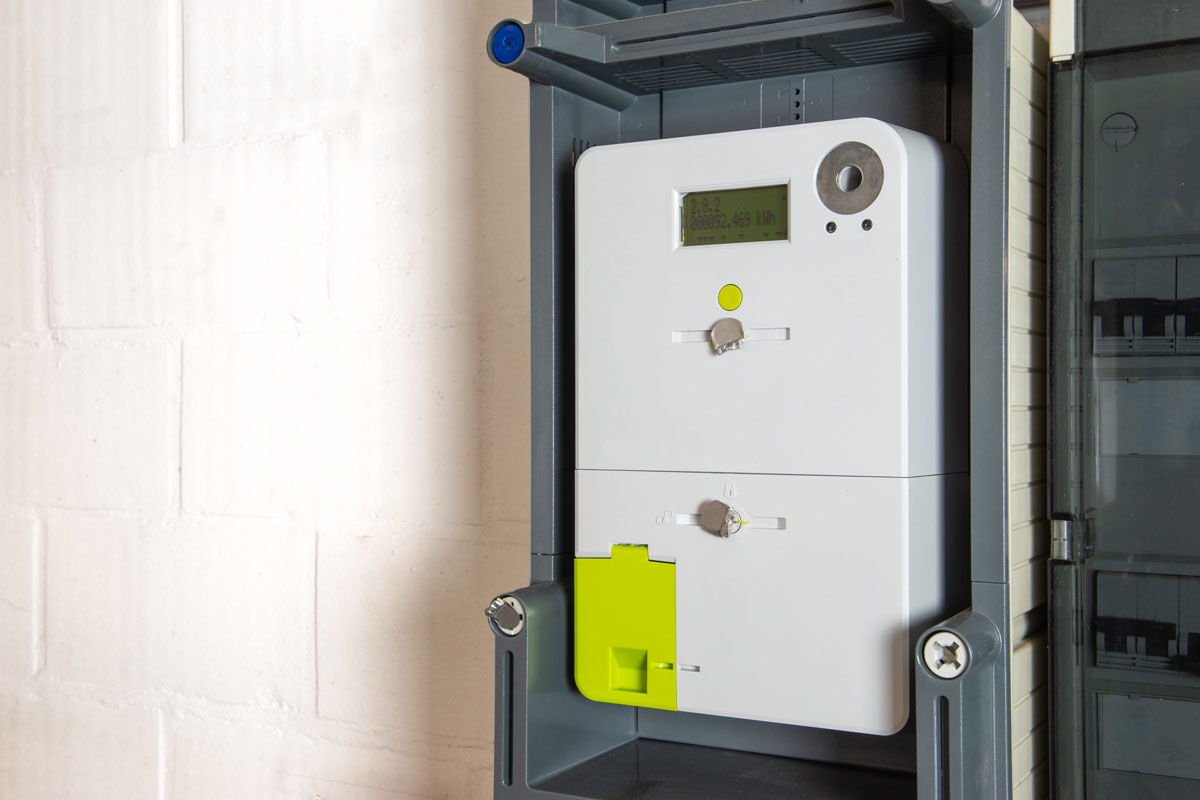
A smart meter sends your usage back to the grid every half hour. That allows suppliers to charge less when the grid is awash with power and more when it’s tight.
A silent taxWhy is all of this climbing now? Because the grid is being rebuilt for a low-carbon future, and someone has to pay for it.The figure put on it during the meeting was around £80 billion of network investment between now and 2031 - money the network operators and government need to raise to carry more renewable power. A large slice of that lands on business bills through standing and pass-through charges. One transmission charge, TNUoS, rose by an average of 64% on 1st April 2026 with another 23 per cent forecast for 2027. Look further out and the numbers stop being abstract: forecasts shared in the meeting show the standing charge on a large half-hourly connection roughly quadrupling by the end of the decade. And this isn’t only a problem for the biggest sites. The same forecasts have the smallest half-hourly band almost quadrupling too, from around £1,400 a year to £5,400, with domestic users on the identical curve, £49 climbing to £143. Whatever size of connection you are on, the line points the same way.Many view it as a silent tax, and it is hard to argue otherwise. The cost is rising fast, and it is going on largely unannounced. The political sting sharpens it. Ministers are leaning on supermarkets to hold down food prices at the same moment they are loading hidden costs onto the businesses that produce the food. You cannot squeeze a sector at both ends and expect feed trackers and cost-of-production contracts to come out the other side cheaper.Help that might be comingThere are changes in the pipeline that could ease this for some farms, though every one of them comes with a warning attached: nothing is signed off, and the timelines move.There are teams that are invested in looking to fix some of the aforementioned problems. Panel conversations regularly take place behind the scenes with detail and evidence captured and submitted to help drive change. Consultations can range from a few weeks to a few years and can include experts from across all areas of the sector.The most relevant carries the catchy title DCP 466, or “tariff band to follow capacity”. The logic is simple. Picture a farm with 100 kVA of agreed capacity, where the threshold for the lower charging band sits at 90. Hand 10 kVA back, drop to 90, and you would expect the standing charge to come down with it. Under today’s rules it often doesn’t - you can shrink the connection and carry on paying as though you hadn’t. DCP 466 would tie the band to the capacity, so a genuine reduction actually shows up on the bill. It was passed to Ofgem on 16 June, is awaiting an authority decision, and could come in around the start of August. For a farm carrying more capacity than it needs, the saving could be significant, albeit there are still kinks to be ironed out as to how the savings would work in practiceA second, DCP 412, looks at “peaky” users - businesses that need a big supply for a short burst and far less the rest of the year. Grain drying is the textbook example, but the principle reaches across agriculture, including the seasonal swing of poultry units running hard in hot weather. A final decision is expected around 1 September, and could let seasonal users drop a band by demonstrating their demand is genuinely concentrated rather than year-round.A third worth watching, DCP 465, matters to anyone running a turbine or battery: it would bring the capacity charges for generation and storage into line and could pull them down. NFU Energy sits on the panels behind several of these proposals, which is why the detail matters even when the names don’t.There is a wider lobbying point too. Agriculture is largely outside the Energy Intensive Industries levy, the scheme designed to shield heavy users from some of these costs. The carve-outs are oddly drawn - dairy only qualifies if there’s cheese being made on site, for instance - and there’s a case for bringing food production properly inside it.Solar, batteries and the banding trap Plenty of producers are turning to solar and battery storage, and rightly so. But this is where good intentions meet the small print.“There are cases where an installer sizes a system for what the business wants to generate, but doesn’t fully understand what that does to the charging band,” Robinson warns. “You have to look at the whole bill, not just the generation.”Push your connection over a threshold to accommodate a bigger array and you can tip into a higher capacity band, where the extra standing charge swallows the saving you went solar to make. Robinson points to a recurring example: a system installed at 70 KVA when 69 would have done the job, dropping the site out of the low-standing-charge bracket and into the half-hourly settled world for the sake of a single unit. The kit generates more, but the return on investment quietly leaks away through a charge nobody flagged at the quote stage.The smart meter questionThe other shift coming down the line is the move to half-hourly data and time-of-use tariffs, and it divides opinion.A smart meter sends your usage back to the grid every half hour. That allows suppliers to charge less when the grid is awash with power and more when it’s tight. A dairy farmer with chillers running at four in the morning, when most of the country is asleep, ought to be paying pennies; the squeeze comes at half six when everyone wakes up. The logic for farms is to ride through that peak on stored power - charging a battery from cheap midday solar and drawing on it through the expensive early-evening window rather than buying off the grid at the worst rate. British Gas is already trialling free power on Wednesdays for smart-meter customers as part of their Peaksave scheme; Other suppliers are also beginning to look into running similar time-of-use trials, some with poultry businesses.The resistance is just as understandable. Plenty of producers see a smart meter the way they see a direct debit - handing someone else a degree of control, a quiet worry that they could help themselves or cut you off. Robinson is reassuring on that point: a supplier is not going to disconnect a working farm on a whim, and where there’s livestock on site the Animal Welfare Act can provide an added layer of protection. The harder truth is that without a smart meter, none of the cheaper time-of-use deals are open to you at all. In one informal show survey, two-thirds of those asked had heard of time-of-use tariffs and two-thirds already had a smart meter - a small sample, but a sign the conversation is moving.The contradiction at the heart of itStep back and the whole thing has a circular logic that is difficult to defend. The country is being pushed towards net zero. Farmers will be central to that - agriculture works around 70 per cent of UK land and is one of the biggest potential sources of renewable generation. And yet the businesses best placed to put green power back onto the grid are the ones being hit with rising standing charges and denied the relief when they export it.“How are you expecting the grid to go completely green,” Robinson asks, “when you are not supporting the very people that will be relied on to help drive the change?”That is a lobbying argument, and the standing charge is, for now, a government problem rather than a producer one. But the message for BFREPA members is more immediate. You don’t need to become an energy expert overnight. You do need to understand that the bill is no longer a single number to be beaten down at renewal, and that the cheapest unit rate can quietly cost you more than the dearer one with the right connection behind it. There are still exciting opportunities to be utilised, but all must be thoroughly considered. The producers who come out of the next few years in the best shape will be the ones who knew what was coming. On the evidence of conversations up and down the country, most don’t yet.Worth checking on your own bill• Your standing charge, and whether it is set to rise at your next renewal.• Your agreed supply capacity - your KVA - and whether it is larger than the business actually needs.• Whether you are half-hourly settled, and which capacity band you sit in.• How any planned solar or battery would change your band, before you sign the order.• Whether you have, or could get, a smart meter - the gateway to time-of-use deals.• Utilising a trusted source, like NFU Energy, who can provide detailed advice.