UK on alert as Newcastle disease outbreaks escalate across Europe
Published on : 17 Mar 2026
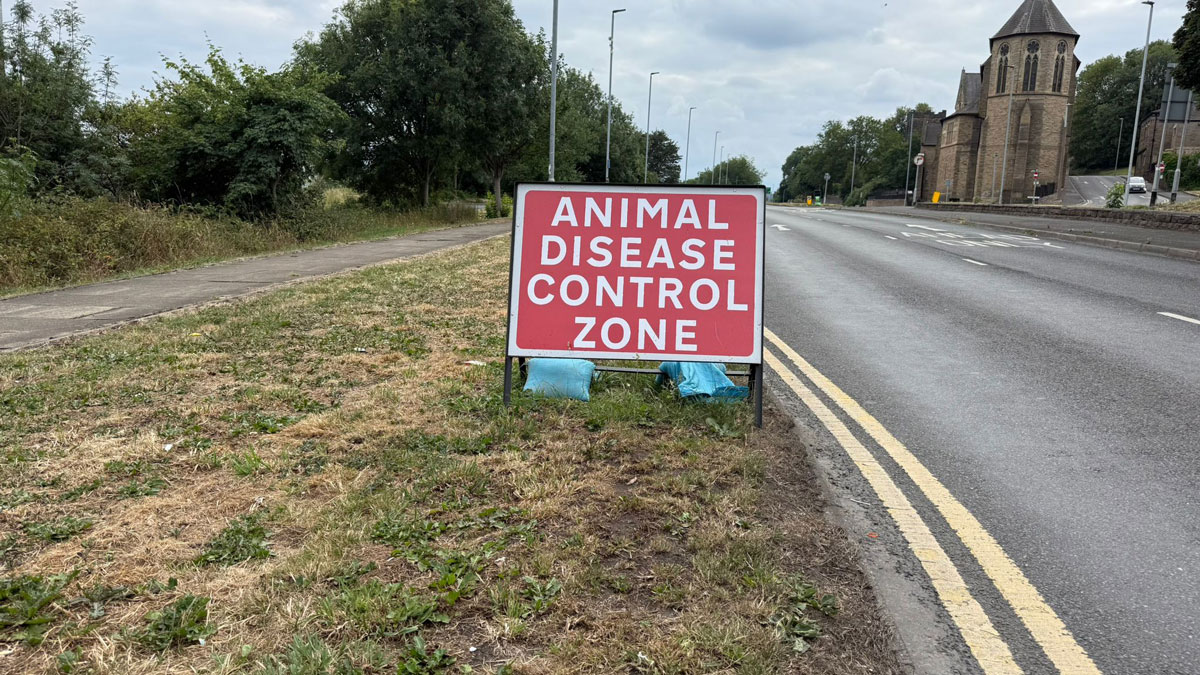
An outbreak of virulent Newcastle disease will lead to all the same disruption and restrictions precipitated by an outbreak of Avian influenza...
UK on alert as Newcastle disease outbreaks escalate across EuropeThe risk of Newcastle disease entering the UK has been raised from low to medium, as outbreaks continue to spread across Europe, prompting renewed warnings for poultry producers.Many column inches have been devoted to Avian influenza over recent years, with outbreaks leading to heartache, housing orders, movement restrictions and multiple contingency plans. Producers might therefore be excused for forgetting about the other significant Notifiable Avian Disease, Newcastle Disease (historically referred to as Fowl Pest). A Notifiable Disease is one that must be reported (notified) to the authorities, or even its strong suspicion, due to the potential highly virulent nature of the disease. For poultry these are the two viral diseases of Avian Influenza and Newcastle Disease.Those with very long memories will recall the devastating Essex 70 virus which led to over 7,000 outbreaks throughout the country in 1970/71. More recently, there were 15 outbreaks (broilers and turkeys) in the early part of 1997 associated with migrating birds during a very severe winter, and a single outbreak in gamebirds in Scotland in 2006.Lest we forget about this virus, Defra have recently announced their increase in risk level of a UK outbreak to MEDIUM. This latest assessment reflects growing concern over the wider European disease picture, with significant outbreaks reported in Poland and new detections in Germany, as previously covered by The Ranger. The change in risk level underlines the increasing pressure from continental disease activity and the potential for introduction via migratory birds or indirect transmission routes.Dave Hodgson of Rosehill Poultry Services said “ I had the chance to speak recently with Dr. Richard Irvine, Chief Veterinary Officer for Wales, and it was refreshing to see the level of seriousness he approached this outbreak with. David Hodson Snr was at the forefront of fighting the 1970’s outbreak using the first generation of vaccines. It can’t be underestimated how serious the implications of this disease are, one of the first cases was a laying site of 6,000 birds which had a 100% mortality rate. The disease wreaked havoc in the UK and was only brought under control by two key acts which have to be done correctly
- Gold standard biosecurity, there has never been a time when ensuring your site remains sealed from possible incursions has ever been more important.
- Vaccination, the standard UK rearing program will have a combination of 2 live vaccinations and an inactivated vaccine. This has to be carried out effectively and as someone who works extensively in this field, the UK has an outstandingly high level of technical competence in the rearing industry.
Please ensure you access biosecurity training if you feel it will be helpful and if you are rearing please access support to check your vaccination procedures if you feel it would be helpful.”Ian Jones, BFREPA board member and Director at Hafren Veterinary Group Limited, said Newcastle disease represents another severe and devastating disease that effects poultry and other birds.He said the increasing number of flocks effected particularly in Germany and Poland is of great concern, particularly as we do not know if it will keep spreading westwards towards us. Commercial laying farms can reduce risk of infection by greatly enhanced biosecurity, just as we do to protect us us against AI. Commercial flocks are normally reasonably well protected against ND by a robust vaccination program in rear. However some of the cases in europe have been in vaccinated flocks.“It is not certain why this is, but it may be due to incorrect or poor vaccination technique and protocols. I personally believe our commercial pullet rearers in the UK are doing a good job of ND vaccination so that is comforting.”Like AI, it can be spread by migratory wild birds, but probably by more and different species are involved, and some will be arriving shortly. The migratory wild birds can then further spread it to our native wild birds. And, like AI, the droppings of these wild birds can contain ND virus. So, like AI prevention, cleanliness and biosecurity is our best weapon.Unfortunately non-commercial birds are not vaccinated so are a risk. So ensure no people who have poultry or other birds come to your farm.“But dont panic (yet), keep your biosecurity standards high, have a review of who can come to your premises. And keep an eye on the News in the ranger to see where ND gets to.”Strains of Newcastle disease virus (like AI viruses) show a spectrum of severity from virulent (hot or velogenic) down to avirulent (mild or lentogenic). The Belgian virus appears to be at the hot end of the spectrum and shows similarity to viruses that have been active in Eastern Europe for some time.Although a hot virus, lower than expected mortality and some non-specific signs have been described, possibly due to the fact that Belgium has a compulsory vaccination policy.
So how does this affect me?An outbreak of virulent Newcastle disease will lead to all the same disruption and restrictions precipitated by an outbreak of Avian influenza. As with AI, vigilance, biosecurity and contingency plans are the three corners of the preparedness/prevention triangle. All the processes you have put in place to prevent an outbreak of AI in your flocks also apply to Newcastle Disease. So this is an ideal opportunity to dust off your current contingency plan and give all your procedures and biosecurity activities a hard look.The big difference between AI and Newcastle is that the vast majority of commercial layers in UK are well vaccinated against Newcastle disease. This will have been achieved by a number of live vaccinations (via drinking water or spray) in rear and completed by an inactivated (dead) vaccination by injection prior to point of lay. These programmes are aimed at protecting your laying flock throughout the laying period, both in terms of mortality and egg drops. That gives us some degree of comfort and reassurance, but should not lead to complacency as it appears that the affected Belgian flocks had been vaccinated.
So how may this affect my birds?Again, as with Avian influenza, the clinical effects of Newcastle Disease infection can be varied. In general terms, as the disease develops affected birds may show some or all of the following signs:
- Very high and unexpected mortality or sickness
- Respiratory distress such as gaping beak, coughing, sneezing, gurgling, rattling
- Nervous signs characterised by tremors and paralysis and twisting of the neck
- Unusually watery faeces (diarrhoea) that are yellowish-green in colour
- Depression
- Lack of appetite
- Affected hens may also suddenly produce fewer eggs. Eggs that are laid may be soft-shelled.
As a result, the disease may lead to intense clinical signs, leading to sudden death, or birds may show less obvious effects as breathing problems, nervous signs or lower egg production as the only detectable clinical signs.Many of these signs are not very specific and may be caused by other conditions or be triggered by the recent very high ambient temperatures.The main clue is something out of the ordinary – you know your flocks day in day out, and it is something strange, unusual or severe that should prompt you to take veterinary advice.
How might the disease get into my flock?The disease is spread from bird to bird or flock to flock by direct contact with bodily fluids of infected birds, especially their faeces. It can also be spread indirectly through people and objects that have been in contact with infected birds, or their faeces.The disease can also spread locally or over large distances via wild birds. Whereas AI is predominantly thought to be spread by waterfowl (ducks, geese or swans), Newcastle disease virus has a potentially bigger host range and outbreaks of ND have been linked to pigeons, crows, rooks, seagulls, cormorants and probably many more bird species.Objects (fomites) that can carry the disease include:
- vehicles
- equipment, including trolleys and egg trays
- clothing
- water and feed
So what can I do to protect my flocks? - Ensure that your flocks have received a robust, full live and dead Newcastle disease vaccination programme
- Look and look again at your biosecurity programme and your contingency plan
- Reduce visitors to your premises to an absolute minimum
- Ensure any necessary visitors adhere to your biosecurity procedures and wear protective clothing and boots
- Ensure visitors have not had recent contact with commercial or hobby flocks
- Place footdips at the entrance to all poultry houses, and use effective virucidal disinfectants at the manufacturers recommended dilution rates, replenished frequently
- Avoid vehicle access to your premises, and for those vehicles that MUST have access ensure that they are visibly clean and spray their wheels with effective disinfectant prior to entry
- Clear up ANY feed spills IMMEDIATELY to discourage attracting wild birds and fence off any range area known to be contaminated with wild bird faeces of any type
- Report any unusual clinical signs, mortality, egg drops or egg quality issues in your flocks to your veterinarian IMMEDIATELY
Take home messageContingency, not complacency. The risks of UK outbreaks of Newcastle Disease are not high, but the recent Defra outbreak assessment rising to MEDIUM (which means an event occurs regularly) indicates that the risk has increased. As a result all producers should review their disease control procedures and report any suspicions or concerns they have about their flocks without delay.