Turkish shell egg imports land in the UK
Published on : 28 Aug 2026
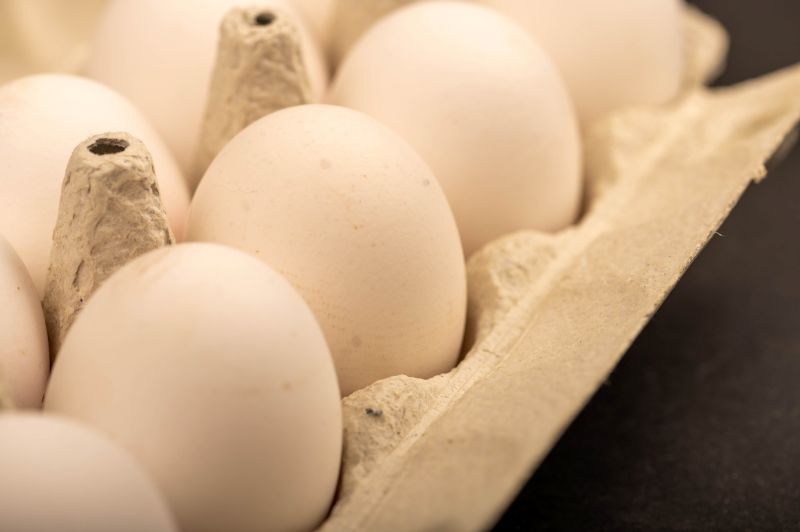 HMRC trade data has recorded the first ever shell egg imports from Turkey, landing in June, and whilst the volume is tiny, the price and the capacity behind it point to a supplier with every reason to grow.
Turkish shell eggs have entered the UK market for the first time, with HMRC trade data recording 40,100kg of fresh eggs in shell worth £50,970 arriving from Turkey in June 2026 under commodity code 040721, which covers table eggs of every production system and excludes hatching eggs, so the data confirms shell egg and nothing more. Anything said about what kind of egg arrived is an assumption. The year-to-date total is identical to the June figure, meaning nothing was recorded from Turkey between January and May. Importers declared the consignment to customs as 695,000 eggs, which makes the average egg 57.7 grams and the load around 1,931 cases of 360, roughly three articulated lorry loads. The trade between the two countries has historically run the other way, with British hatching eggs supplying Turkish breeding programmes.Set against the established importers, the volume is small. Ukraine alone shipped 48 times the Turkish tonnage in June, around 137 artic loads against Turkey’s three, and the Turkish consignment stands at a quarter of Belgium’s monthly traffic, with the country by country figures in the table below. The comparison that should concern producers is the price. Turkish eggs arrived at £1.27 per kilo, roughly 95p a dozen, undercutting Ukraine, the UK’s cheapest major supplier, by 16 per cent, undercutting Spain, Belgium and the Netherlands by more than 40 per cent, and undercutting Poland by half, all measured at the border before any duty is paid.
| June 2026 | Turkey | Ukraine | Poland | Spain | Belgium | Netherlands |
|---|
| Net mass (kg) | 40,100 | 1,918,562 | 279,818 | 214,693 | 156,044 | 110,181 |
| Value (£) | 50,970 | 2,895,712 | 705,287 | 489,929 | 340,296 | 247,591 |
| Price per kilo | £1.27 | £1.51 | £2.52 | £2.28 | £2.18 | £2.25 |
| Approx. price per dozen (62.5g egg) | 95p | £1.13 | £1.89 | £1.71 | £1.64 | £1.69 |
| Eggs (62.5g) | 641,600 | 30,696,992 | 4,477,088 | 3,435,088 | 2,496,704 | 1,762,896 |
| Cases of 360 | 1,782 | 85,269 | 12,436 | 9,542 | 6,935 | 4,897 |
| Artic loads | 2.9 | 137 | 19.9 | 15.3 | 11.1 | 7.9 |
A word on the prices quoted. These are HMRC statistical values, the figures importers declare at the border, which for imports broadly means the price paid to the exporter plus the freight and insurance to bring the consignment to the UK, and the per kilo and per dozen figures in the table are simply that declared value divided by the declared weight. They are landed values at the quayside, before any tariff or border inspection charge is paid and before UK haulage and the importer’s margin are added, so the price a wholesaler or food manufacturer actually pays will be higher, and none of these figures can be read as a shop price. The comparison between countries is still like for like, because every consignment is valued the same way, but duty is added after this point, which goes a long way to levelling Turkey’s advantage over tariff free Ukrainian egg once the eggs are on UK soil. As for what kind of egg arrived, the assumption that these are caged rests on Turkey’s production profile and on a landed price well below anything free range or organic would command, and it remains an assumption until the eggs turn up on a shelf or a delivery note.Home produced egg has enjoyed unprecedented values since the spring of 2022, and the price sensitive end of the market, processing, wholesale and parts of the food service sector, has been forced to seek out new supply and more reliable commercial arrangements. Major retail has first shout on British egg, so when supply tightens it is the buyers at the back of the queue who go without, and those buyers have learned to build import relationships they can depend on. The move away from cage production compounds it, because as the UK reduces its cage supply the cheapest domestic egg is steadily disappearing, and food service buyers looking for a cheaper egg are finding it in imports.
Why Turkey can scale upTurkey runs a laying flock of around 114 million birds, close to three times the size of the UK flock, and the sector carries an export capacity of 15 to 25 per cent beyond its domestic needs. In April 2026 the Turkish authorities added a 5,000 tonne monthly export quota on top of the existing 1,000 tonne monthly allowance under the registered export system, a sixfold increase in the volume cleared to leave the country each month. The first UK consignment arrived two months after that quota came into force.Turkey also has volume looking for a home. Iran took $27 million of Turkish shell eggs in 2023, making it the fourth largest destination, but that trade appears to have been squeezed hard as American sanctions pressure and the escalation in US-Iran tensions tightened payment routes and border enforcement. Turkish chambers of commerce have warned exporters that controls at the Iran-Iraq border crossings, previously a relaxed route for Turkish eggs moving into Iraq, would become far stricter, whilst Iraq itself has withheld import licences. That volume now needs somewhere else to go.Turkey has already shown how quickly it can redirect supply. When avian influenza emptied American shelves, the Turkish egg producers’ union YUM-BİR coordinated 15,000 tonnes of shipments to the United States between February and July 2025, around 700 containers, and US imports of Turkish eggs had already doubled in 2024. Turkey’s push into the EU is also established, with Italy now its biggest European egg market, and a country that can build a trade with America in a matter of weeks will have little difficulty adding the UK to a route it already runs.
A glut of small eggsThere is a further reason to expect Turkish eggs to arrive cheap. The avian influenza outbreak in late 2024 cut Turkish production significantly and triggered heavy restocking, and the large number of young flocks now coming into lay is producing a wave of small eggs. The Turkish Trade Ministry has acknowledged weak domestic demand for eggs under 53 grams from these new flocks, and its recent export rule changes were made partly to help move them. Small eggs suit exactly the channels through which imported eggs enter Britain, processing and value lines, where the buyer rarely sees a country of origin.The egg count changes considerably if the Turkish trade is built on smalls. At the UK average weight the June consignment held around 641,600 eggs, but at a small egg weight of 50 grams the same 40,100kg holds 802,000 eggs, 2,228 cases of 360 rather than 1,782, a quarter more eggs for the same tonnage and the same money. The customs declarations settle it part way, because importers declared 695,000 eggs against the 40,100kg, an average of 57.7 grams per egg, lighter than the UK average and heavier than a true small, which points to a mixed load leaning light rather than a load of true smalls.
| | Turkey, June (62.5g) | Turkey, June (50g smalls) | Ukraine, June (62.5g) | Ukraine, Jan-June (62.5g) |
|---|
| Eggs | 641,600 | 802,000 | 30,696,992 | 162,559,744 |
| Dozens | 53,467 | 66,833 | 2,558,083 | 13,546,645 |
| Cases of 360 | 1,782 | 2,228 | 85,269 | 451,555 |
| Artic loads | 2.9 | 3.6 | 137 | 724 |
One artic load is taken as 26 pallets of 24 cases of 360, or 224,640 eggs, roughly 14 tonnes at the UK average egg weight of 62.5g. Small eggs are calculated at 50g; the Turkish small class covers eggs under 53g. All trade figures are HMRC uktradeinfo, commodity code 040721. HMRC also publishes a supplementary unit for this code, the number of eggs declared in thousands, but it is recorded as declared and not validated against weight, and the counts declared for Ukraine, Poland and Spain are incompatible with their declared tonnages whichever way the unit is read. Egg counts in the tables therefore use the 62.5g convention throughout; Turkey’s declared count of 695,000, which does pass the weight check, is given in the text.Why producers should be concernedThe concern is the pattern rather than the tonnage. The British Egg Industry Council’s Shell Shocked report put UK egg imports up 60 per cent in five years, from around one billion to 1.6 billion eggs a year, driven by Ukraine and Poland, with much of the supply coming from conventional cage systems that have been illegal in the UK since 2012 and entering through borders the report says lack systematic testing and effective inspection. Turkish production is overwhelmingly cage based, and Turkey’s animal health status has already limited its American shipments to breaking eggs processed at approved facilities. Every condition that let Ukrainian volumes build largely unnoticed applies equally to Turkey, and Turkey adds a far bigger flock and a government actively clearing the way for exports.The worrying thing is the size of what could follow. There is no UK side cap on the volume of Turkish egg that can arrive, and the only volume control in the system is Turkey’s own export quota. At 6,000 tonnes a month that quota is 150 times the June consignment, and if every quota tonne came this way it would be within sight of the UK’s entire current import trade of around 100,000 tonnes a year. Nobody expects that, because Turkey serves many markets, but the quota is Turkish policy and it can move again.Cheap caged egg arriving in volume will also rankle with producers, whose main concern is whether imports match the strict standards they work to at home and what that means for food safety. The UK Health Security Agency declared a national salmonella outbreak in August linked to imported eggs, and by the end of the month the total under investigation had reached 474 cases across three genetically related clusters, with two deaths. The agency identified the rise in late May, cases across the clusters have increased since June, and it has said there is no identified link to UK produced eggs or poultry. There is no established connection between the outbreak and Turkey, but it makes the producers’ point for them, because imported eggs are already making people ill whilst the cheapest supplier yet has just appeared in the data.There is one important difference between Turkey and Ukraine. Ukraine ships into the UK tariff free under the trade liberalisation granted after the Russian invasion, whilst Turkey pays the standard UK tariff on shell eggs of £25 per 100kg, with a limited quota available to countries outside the EU at £127.20 per 1,000kg, and EU suppliers ship duty free under the trade agreement. Turkey is therefore the only supplier in the June table paying duty at the border, and the duty matters, because £25 per 100kg is 25p a kilo, which takes the June Turkish price from £1.27 to around £1.52 duty paid, level with Ukraine’s June figure. The undercutting holds at the quayside and disappears against Ukraine once duty is paid, whilst the gap to the EU suppliers remains wide even after duty. Ukraine has also used its head start to establish distribution centres around the UK and build a network to serve them. That is a first mover advantage Turkish exporters would have to spend time and money matching if the June consignment turns out to be the start of something permanent, and it is a brake on how fast Turkey can grow. It may also steer Turkish volume towards the processing end of the market, where everything is bought on price.Many in the industry expect this situation to compound over the coming years, with the market settling into two tiers. British retail egg will be sourced from UK producers through the recognised packer network, and that part of the market will consolidate, more hens in fewer hands and fewer, larger packers. The rest of the market, growing demand from value retailers, increasingly influential independent supermarkets, a growing wholesale sector, food service and manufacturing, will have supply based on imports, from whoever is the most competitive.The Ukrainian figures show what this can look like. Shipments rose nineteen-fold in 2025, from 765 tonnes to 14,635 tonnes, and Ukraine is still sending more, with the first half of 2026 alone at 10,160 tonnes, on course for more than 20,000 tonnes this year, around 40 per cent up on 2025. The price has firmed as the trade matured, from £1.49 a kilo in 2024 to £1.85 this year.
| Ukraine to UK | 2024 | 2025 | 2026 (Jan-June) |
|---|
| Net mass (kg) | 765,058 | 14,634,553 | 10,159,984 |
| Value (£) | 1,141,066 | 25,270,123 | 18,760,369 |
| Price per kilo | £1.49 | £1.73 | £1.85 |
| Cases of 360 (62.5g) | 34,003 | 650,425 | 451,555 |
| Artic loads | 54.5 | 1,042 | 724 |
Cases and artic loads are calculated at the 62.5g convention; Ukraine’s declared egg counts fail the weight check described in the note beneath the earlier table and are not used.This is a single month of data, and the figures give no clue when in June the eggs landed, so 40 tonnes could be one consignment in the final week just as easily as the start of a steady flow, which makes the July data the telling number. But the import market Turkey is stepping into is huge and still growing, and a new supplier prepared to sell at the bottom of the market changes the arithmetic even at small volumes, because competition for UK contracts gives every established exporter a reason to drop their price, and the cheapest available import is the benchmark packers reach for when negotiating with their own producers. Ukraine’s own UK trade barely registered two years ago. If Turkey follows the same curve, June 2026 is the point on the graph where it started.