

Research meeting underscores changing nature of H5N1 threat
Published on : 27 Mar 2026
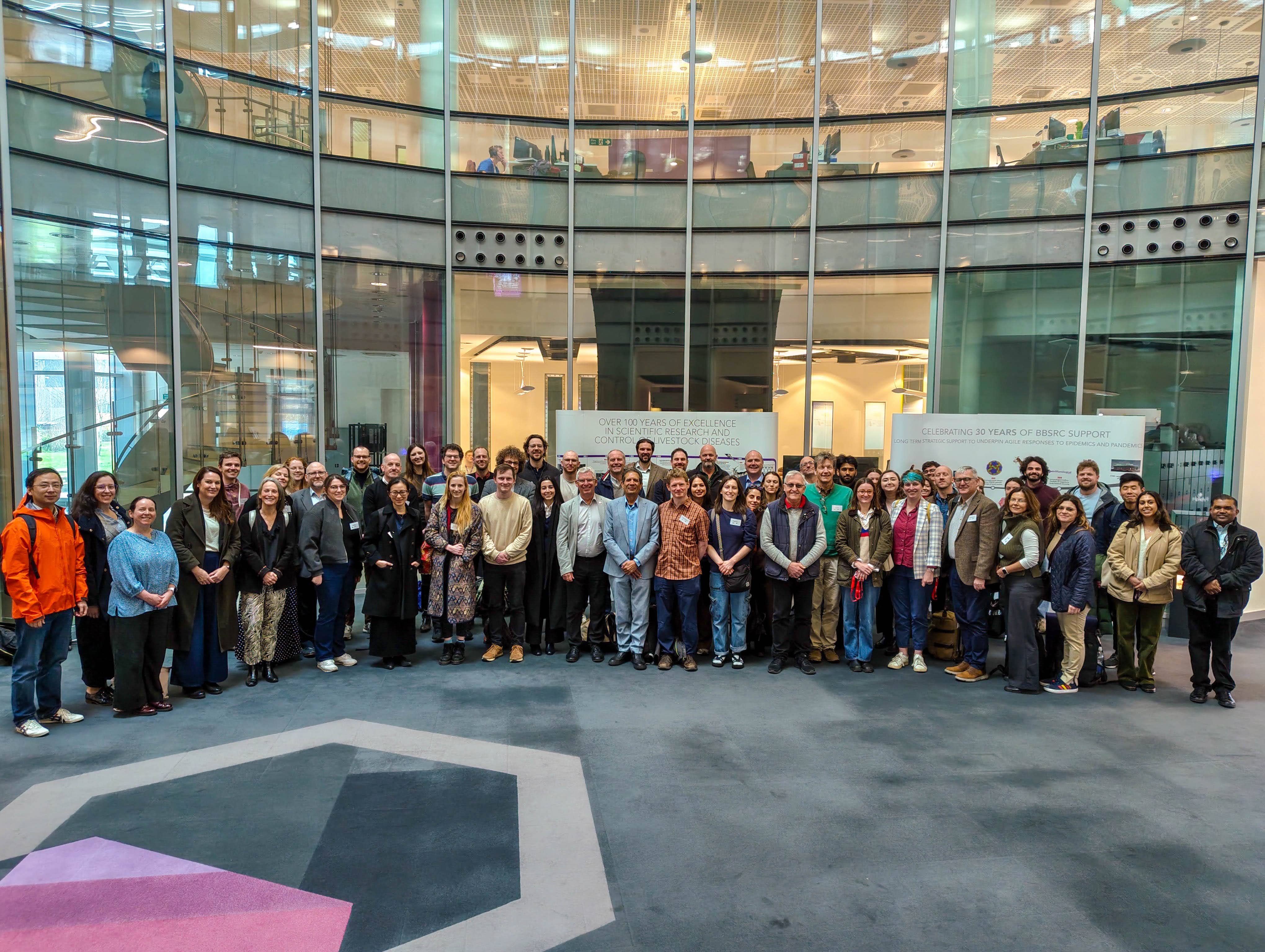 Gary Ford, Head of Strategy and Producer Engagement at BFREPA, attended the Flu TrailMAP and FluTrailMAP One Health joint meeting at The Pirbright Institute on 23–24 March 2026, where researchers, vets and policy specialists presented the latest work on avian influenza.Based in Surrey, The Pirbright Institute is one of the UK’s leading centres for livestock disease research, focusing on viruses affecting poultry and other farm animals, including avian influenza and foot and mouth disease. Its work underpins the UK’s approach to disease surveillance and control.Opening the meeting, Dr Ian Brown of The Pirbright Institute, one of the UK’s leading avian influenza specialists, and Professor Wendy Barclay of Imperial College London, a virologist specialising in influenza transmission and zoonotic risk, outlined how the programme has developed in response to the continued spread of H5N1.The focus has shifted from tracking outbreaks to understanding how the virus evolves, spreads and adapts across species.Dr Joe James of APHA reviewed six years of H5 HPAI in Great Britain, describing how the disease has moved from sporadic incursions to a more persistent presence. Alongside this, work from the Roslin Institute, presented by Dr Will Harvey, showed how genetic reassortment is driving diversification in circulating strains, influencing both spread and host range.Understanding transmission ran through much of the programme. Professor Rowland Kao of the University of Edinburgh presented modelling work combining wildlife data, poultry populations and viral sequencing to simulate how HPAI moves through wild and domestic systems. Related work from the University of Leeds, presented by Dr Jamie Dunning, showed that transmission is strongly linked to shared environments between species rather than direct contact alone.Biosecurity was discussed in practical terms, with research led by Professor Pablo Alarcon of the Royal Veterinary College highlighting variation in how measures are applied across the industry. Differences between systems, resources and day to day pressures all influence what can be achieved on farm. For free range units, exposure to the external environment remains a constant factor.The financial impact of HPAI was also outlined, with outbreaks continuing to carry significant cost across the sector. Alongside this, work on environmental sampling is exploring how the virus can be detected outside the bird, offering potential for earlier warning.Wildlife surveillance remains central, with evidence confirming the role of wild birds in maintaining infection pressure.The second day focused on how the virus behaves and how birds respond. Dr Sofia Riccio of APHA presented work comparing H5N1 genotypes, showing clear differences in mortality and transmission. Dr Leah Goulding of the University of Nottingham examined how chickens and ducks respond differently at a cellular level, helping explain variation in disease outcome.Environmental transmission was addressed by Dr Lizzie Billington of APHA, whose work found that airborne spread between farms is unlikely, with transmission more closely linked to shared water, faecal contamination and indirect contact routes.Several presentations focused on how the virus is continuing to adapt. Dr Rute Pinto of the Roslin Institute outlined how H5N1 has acquired mutations in dairy cattle that improve replication in mammals, while work from Pirbright and Imperial College showed these changes developing gradually rather than through sudden shifts.Professor Munir Iqbal of The Pirbright Institute addressed immune escape, highlighting how emerging mutations are beginning to affect antigenicity and may reduce vaccine effectiveness. Data presented from France, where duck vaccination began in October 2023, showed outbreaks falling from 1,374 in 2021–22 and 396 in 2022–23 to just 10 in 2023–24. More recent figures showed 120 outbreaks in 2025–26, including cases in vaccinated flocks.Ash Banyard of APHA presented work on host immunity across wild and domestic birds, examining how antibody responses influence infection outcomes. The work showed that vaccination can reduce disease but does not prevent infection, leaving continued reliance on monitoring and detection.The One Health sessions widened the focus beyond poultry. Professor Pablo Murcia of the University of Glasgow presented evidence that dogs could act as intermediate hosts, while work on recent dairy cattle outbreaks in the United States showed how the virus has moved into new species. Viral material was detected in a proportion of milk samples, including pasteurised products, although no live virus was found after pasteurisation. Live virus was identified in raw milk, with further reports linking infections in farm cats to milk exposure.New analytical tools are also being developed. Work presented by Dr Daniel Goldhill of the Royal Veterinary College introduced an open access platform for analysing influenza mutations and tracking emerging risks.Reflecting on the meeting, Mr Ford said: “A fascinating and very informative two days. Great credit goes to the researchers and scientists from the UK’s leading institutions who came together and collaborated on this key project. The work, largely unseen by industry, is going a long way to better understand the virus and the risk posed to humans, all with the aim of protecting human health and the health and welfare of our national flock.”The meeting closed with further discussion on vaccination strategies in both poultry and humans, alongside the practical challenges around deployment, surveillance and maintaining disease detection.A number of the projects are already feeding into Defra advisory work, with further outputs expected as the research moves into its next phase.