

Pullet availability hit hard by HPAI
Published on : 27 Jan 2026
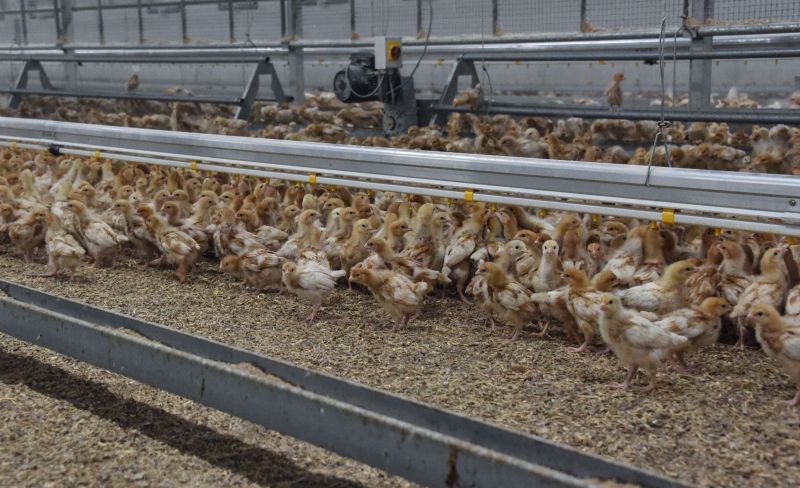 The current bird ‘flu season has lived up to its billing by authorities as being particularly awful. Before the book has even closed on January, the total losses since the official season began on 1st October will make the 2025/26 year the deadliest the laying industry has ever experienced.As hens are lost, the immediate thought may be for the resulting impact on egg availability and the disruption of the cull and cleaning process. But spare a thought for the rearers, too.In the most direct sense, the toll on the pullet trade during this HPAI season has been unprecedented. Alongside the large laying flocks lost to recent outbreaks of high pathogenicity avian influenza (HPAI), more than 300,000 pullets have also been wiped out. The total since October already stands at more than half a million birds, with Glenrath and Noble Foods both suffering outbreaks accounting for over 100,000 pullets at a stroke.Aside from the immediate losses, however, there are more systemic challenges facing the rearing trade that are now acting as an anchor on the wider industry, impeding the ability to recover from the collective cost of disease. A long-term lack of appreciation of the value of a pullet, and also a chick, has meant that the foundations of the laying cycle are weak and underinvested. Nick Bailey, Managing Director of Joice & Hill, says, “Historically, there has not been the margin in either pullet or parent stock production to justify capital expenditure in new buildings.”There has been some investment in pullet production sites, but in specific places rather than to the benefit of the whole trade. Several of the larger producer-packers have modernised existing houses and even increased capacity, but the birds reared here are destined for a captive, internal market. On the open market, many pullets are grown on contracted sites with buildings in their second or even third reincarnation of purpose.Whilst the fortunes of laying farms have been transformed since 2022, the margins in rearing have in no way kept pace. The ADAS cost of production surveys highlight the disparity. In the past 4 years, the price of a pullet has risen by 27% from £4.64 to £5.90. Over the same period, egg prices have leapt by more than 70%. Taking account of the trend toward longer cycles and increasing yields, the cost per dozen of the pullet is diluted, making the price even better value. Over the same 4-year period, the pullet cost has risen by little more than 3ppd from 16p to 19p. Eggs have increased by 65ppd in the that time.The extended cycle length creates more headaches for rearers than just selling fewer pullets over time. The margins on a rearing farm depend heavily on efficient use of the space, maximising the utilisation of house capacity. Of old, nearly the entire market stocked brown birds on a 72-week cycle, meaning replacement planning was simple. Today, the mix of white and brown hens on different cycles combines with the overall trend of extended lifespans, giving rise to less predictability and longer, costly, empty periods. As utilisation falls, profitability rapidly drains from the business. And that’s before any disruption brought about by a disease outbreak, either directly or indirectly.The acute pressure on supply of pullets today is not limited to the UK. Exactly the same combination of circumstances are occurring in the Netherlands and Germany. Egg shortages are being reported, alongside inflation in supermarket prices, attributable to “the consequences of last year's major avian influenza outbreaks and the associated restrictions,” according to one Dutch news outlet.Echoing Mr Bailey’s assertions, Steve Carlyle of Country Fresh Pullets suggests the problem isn’t only one of pullet supply, but chicks as well. “Our rearing space is almost totally allocated for the next year, and 2027 is already filling up. There are businesses looking for pullets in 2026 that will not be able to find them. Even if we had the space available, the chicks aren’t there. The earliest we can get some breeds is April 2027, but there’s simply more demand than can be supplied.”Nick Bailey again, “In 2020, chick placings stood at 41 million. The market collapsed to just 34 million two years later, and parent stock numbers were adjusted accordingly.We’re now responding to the bounce back, but it takes time. We’re actively progressing with our plans to increase capacity again, securing the necessary funding, building and equipment supply and of course planning consent.”The surge in demand for chicks and pullets is only one part of the puzzle for breeders and rearers, however. Competition for housing stock is a growing threat to these sectors. It isn’t just the laying industry with a strong appetite for growth rubbing up against friction in the new build pipeline. The meat sector, with a move to lower stocking densities and slower growing breeds, has the same space constraints. Limited supply is driving improvement in grower and breeder returns and, with it, the same imperative to acquire more capacity. Just as the egg laying sector has tempted broiler breeders to cross the poultry divide, the integrators are on the look out for houses suitable for conversion in the opposite direction. Laying parent stock producers and pullet rearers will already be paying more to hold onto the production they’ve got, let alone increase their supply.Egg producers may well be frustrated that their chosen breed may have a longer lead time, or that their preferred restocking date isn’t possible, or that there simply isn’t the availability of space for several months. And with such a high opportunity cost, frustration would be understandable. Nick Bailey with a final word, “If I could give one piece of advice to egg producers, it would be to book ahead.” Now is not the time to take for granted the choice of breed or the timing of your next flock of hens.