

Poultry outlook forum highlights confidence, constraints and pressure for change
Published on : 14 May 2026
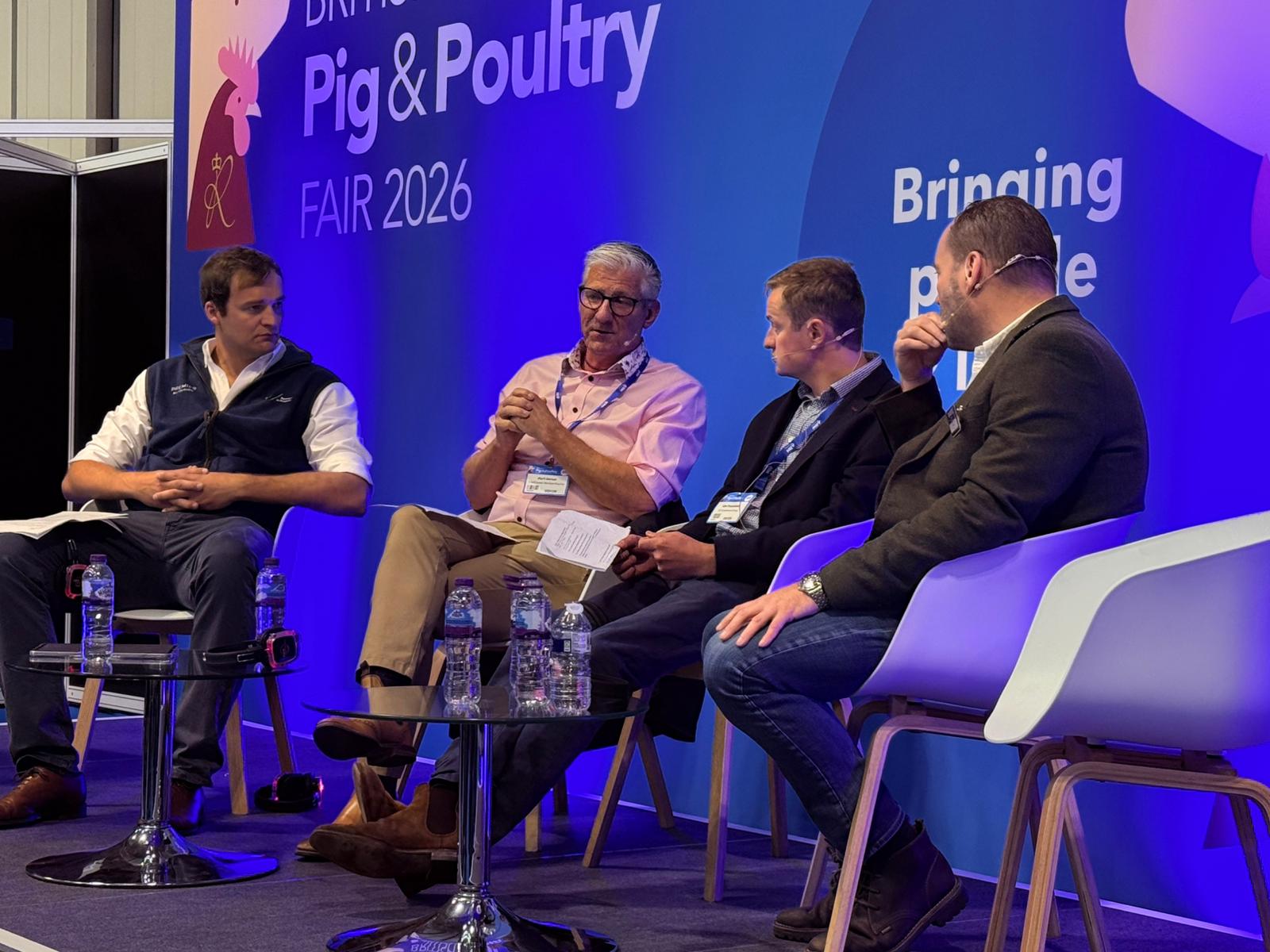
The Poultry Meat Outlook forum was chaired by Ralph Bishop of Premier Nutrition, with a panel featuring David Neilson of Avara Foods, Mark Gorton of Traditional Norfolk Poultry and Sam Drummond of EC Drummond
The British poultry meat sector has the demand, the product and the producer confidence to grow, but planning delays, disease risk, labour, imports and public procurement remain major barriers to unlocking that potential.That was the central message from the Poultry Meat Outlook forum at the British Pig & Poultry Fair 2026, chaired by Ralph Bishop of Premier Nutrition, with a panel featuring David Neilson of Avara Foods, Mark Gorton of Traditional Norfolk Poultry and Sam Drummond of EC Drummond.Opening the session, Mr Bishop said the discussion was intended to move beyond “doom and gloom” and focus on the long term opportunities for the poultry sector over the next 20, 30, 40 and 50 years.He said the industry already had “fantastic products” and wanted to examine what was needed to unlock the future potential of poultry meat in the UK, while understanding the challenges facing businesses across the supply chain.David Neilson, agriculture director at Avara Foods, brought the perspective of a large integrated poultry business. He said he had spent 30 years full time in the industry after growing up around poultry through his father’s work, starting with weekend egg collection before building a career across turkey, broiler and duck production.Sam Drummond, of EC Drummond, represented broiler producers operating “at the coal face” of day to day poultry production. He said the family business had been involved in the sector since the 1950s and now had nationwide broiler coverage.Mark Gorton, of Traditional Norfolk Poultry, described a business built over almost 40 years around premium free range and organic chickens and turkeys. The Norfolk based company grows and processes birds for retail customers, producing around 100,000 free range chickens a week and approaching half a million Christmas turkeys for the festive market.One of the strongest themes throughout the discussion was the continued growth in demand for poultry products, particularly higher welfare and premium lines.Mr Gorton said consumer understanding of organic and free range poultry had changed dramatically over the past four decades. What had once been considered niche products were now familiar to younger generations who had grown up with welfare and provenance messaging.Despite economic pressures, he said demand for premium poultry continued to rise. Organic chickens could retail at around £20 and Christmas turkeys at £150, yet consumers were still willing to buy them.“We’re still seeing demand for our products grow,” he said. “Christmas is the one time of year when people want to forget everything else and enjoy time with friends and family. Turkey is still the centrepiece.”He said the major obstacle to further growth was not consumer demand but space and planning restrictions. His business had partly worked around this through mobile poultry houses and polytunnels, but conventional poultry housing remained extremely difficult to secure permission for.Mr Drummond said the broiler sector was also looking beyond survival and back towards reinvestment. His business was focused less on rapid expansion and more on renewing existing infrastructure to extend the life of ageing poultry sheds.“We’ve got houses that are 35 years old,” he said. “It’s about reinvesting back into our buildings and giving them another 25 years of lifespan.”He added that producers needed confidence and security from retailers and processors before committing to major investment.Mr Neilson argued poultry and pig meat would play an increasingly important role in feeding the UK population because they efficiently converted grain into affordable, high quality protein.“We can breed really high quality protein relatively cheaply,” he said.He said forecasts suggested chicken demand could grow by 5% to 6% annually over the next five years and warned the UK risked running short of domestically produced chicken unless planning barriers were addressed.Retail demand, he said, was now even stronger than during Covid, when food service closed and consumers shifted heavily towards retail purchases.He added that retailers had recognised the importance of securing supply chains and were now looking at longer term agreements with producers.Labour shortages and recruitment challenges featured heavily throughout the discussion.Mr Gorton said around 80% of his seasonal Christmas workforce returned each year, allowing processing to ramp up rapidly at the start of the festive season. Traditional Norfolk Poultry employs around 300 people year round and more than doubles that number at Christmas through seasonal worker schemes.He said investment in wages, progression and staff retention had been critical.“We want to be the place where people want to come and work,” he said.Mr Drummond said recruitment remained difficult for some farm based roles, particularly the final “5%” of jobs that were hardest to fill. Weekend work and the lifestyle demands of poultry farming continued to deter some younger workers.Mr Neilson said the industry would need to rethink employment models over time, with younger generations increasingly expecting greater work life balance.He also highlighted the lack of poultry specific education and training routes.“There isn’t a poultry training course,” he said. “You can go and learn about crops and all sorts of other things, but you can’t go and learn specifically about poultry.”A major frustration for the panel was the continued reliance on imported poultry in public procurement despite strong domestic supply capability.Mr Gorton said schools, hospitals and public catering outlets could make far greater use of British poultry products, particularly cuts such as wings and drumsticks that often struggled to find premium retail markets.“We’ve got perfectly good homegrown British product rather than importing,” he said.Mr Neilson agreed, saying many public sector catering operations simply did not have the budgets to buy chicken breast fillets, but there were opportunities to use other cuts if systems and specifications changed.Both speakers also raised concerns about imports produced to different standards and the lack of transparency around poultry served in food service settings.Consumers generally knew the provenance of supermarket poultry, Mr Gorton said, but often had little idea where meat served in restaurants, schools or hospitals originated from.“If somebody saw Chinese chicken on the menu, you probably wouldn’t want to eat it,” he said.Disease control and avian influenza formed another major area of discussion.Mr Gorton revealed that Traditional Norfolk Poultry was running the UK’s first avian influenza vaccination trial on commercial farms, focused on Christmas turkeys.He said the trial was around 10 weeks in and could represent the first step towards a wider vaccination strategy if successful.“It should be hopefully the beginning of the end of this virus,” he said.Mr Neilson said he would not be willing to significantly expand fresh turkey production without progress on vaccination because of the financial risk posed by avian influenza outbreaks and movement restrictions.Planning permission repeatedly emerged as the sector’s greatest frustration.Mr Neilson said poultry applications were increasingly being challenged by NGOs, leaving local planning officers reluctant to approve developments.He argued the industry needed a national framework for poultry development rather than leaving decisions solely to local authorities.“We need to lobby government to create a national framework in terms of planning permission,” he said.He also called for the industry to improve its communication with consumers and government, arguing producers should be more vocal about the standards and welfare achievements already delivered by British poultry farming.Mr Gorton agreed, saying producers should not be afraid to promote what they do.“We should all be going out and telling everybody what we do because it’s fantastic,” he said.As the session drew to a close, the panel reflected on what a strong poultry sector could look like over the next 10 to 20 years.Mr Drummond said long term profitability and balanced supply would remain essential, alongside greater use of homegrown feed ingredients and continued reinvestment in infrastructure.Mr Neilson pointed towards increasing digitisation, automation and technology across the poultry sector, including real time farm monitoring and more integrated data systems.Asked to describe the future of the British poultry industry in a single word, Mr Neilson chose “optimistic”, Mr Drummond selected “great”, while Mr Gorton said “excited”.The forum ended with broad agreement that demand for British poultry meat remains strong. The challenge now facing the industry is whether planning, labour supply, disease control and government policy can move quickly enough to allow producers to meet that demand.