

How Moba taught a camera to grade an egg
Published on : 7 Jul 2026
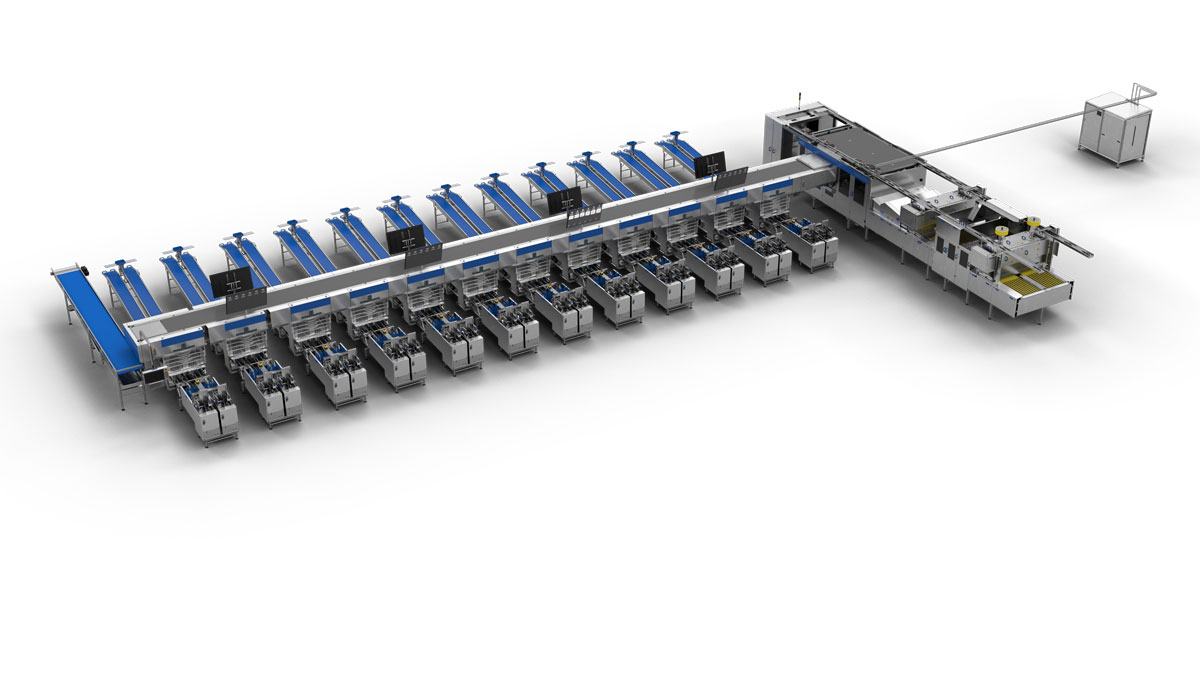
The package sits inside Moba’s Omnia PX+ and latest grading line Magna, which handles up to 216,000 eggs an hour...
Moba Group sales manager Marc Baxendale talks to Ranger about the vision system now doing three jobs at once - finding dirt, spotting cracks and weighing every egg without touching it - and why tighter Class A grading turns accuracy into money for producers.For as long as eggs have been graded by machine, determining egg characteristics has meant handling the shell. Acoustic detectors tap it and listen; mechanical scales sit the egg on a load cell. Moba, the Barneveld grading and packing manufacturer, is putting cameras and a trained neural network in their place - and Marc Baxendale, the company’s sales manager, makes no secret of how much now rides on what a camera can see.Moba refers to this as their Vision Technology - a camera-and-AI approach to egg inspection rolled out across its graders since 2024. In place of the moving parts that once touched the shell, cameras and a deep-learning network do the inspection. The software, the company says, is trained on thousands of sample images to judge each egg as it passes, reading cracks too fine for the human eye and working on any shell colour in the white and brown spectrum, from white through to the darkest brown. The crack-detection element is sold as the Vision Shell Inspector; but now also weighs the egg.“There are two jobs Moba’s Vision Technology powered by AI is doing,” he told The Ranger. “One is crack detection and one is weighing.” None of the two touches the shell. The package sits inside Moba’s Omnia PX+ and latest grading line Magna, which Baxendale says handles up to 216,000 eggs an hour and was launched in Europe at VIV Europe.One of the first major UK installations is taking shape at a packing operation in the Lake District, chosen in part for the camera system. The build is at an early stage, with the full facility - wrapped around heavy robotic automation - due to run by September. “It’s going to be something of a work of art to see,” Baxendale said.
Moba refers to this as their Vision Technology - a camera-and-AI approach to egg inspection rolled out across its graders since 2024...
Crack detection: moving the line, not the machineMoba says the system is trained to recognise nine distinct types of crack, though Baxendale is quick to say the number is not where the value lies. The value is in where the threshold sits - and in resisting the industry’s long habit of setting it too high.“With crack detection you’ve always had to err on the side of caution,” he said. “If an egg has a hairline crack and it gets transported to the supermarket, there’s a possibility it can break.” A broken egg takes the rest of the box with it, so packers have run their machines hot, pulling anything questionable. That keeps the retailer safe, but it also dumps sound Class A eggs into seconds - worth far less to the producer than the grade they should have made.The obvious worry is that a sharper machine simply finds more to fault. Baxendale turns that on its head.“Instead of setting the machine oversensitive to make sure we catch everything, we can set it closer to the real edge of whether something is a crack or not,” he said. “Because you can sit closer to that line, you keep more A grade in your A product - and that’s more money in the producer’s pocket.” The accuracy is aimed not at hunting down more faults but at the eggs the old cautious setting would have thrown into seconds on suspicion, pulling them back as Class A.He is careful not to rubbish what came before. “It’s progress,” he said. “People will say the old systems were rubbish. They weren’t. It’s like F1 cars - the previous car wasn’t rubbish, it was the very best you could have at the time. We were always class-leading, and we still are. This is just a step closer.”The sensitivity, he stresses, is set by the packer, not fixed in the machine - and the machine can only work with what it is given. “What you put in is what you get out,” he said. “Producers who work hard to have good-quality eggs will naturally be in a better position. They just will be.”

This proven Vision Technology has inspected over 63 million eggs daily around the world...
Weighing without a scaleThe weighing job is where Moba is most guarded. There is no weigh cell and no contact; the egg is weighed by camera.“The weigher doesn’t go through a weighing machine as such - it’s not touching the egg,” Baxendale said. “Without giving away all the details, we developed and patented deep learning algorithms, which scan every individual egg 26 times. It’s a very specific type and spectrum of light, very specific cameras and some smart deep-learning algorithms.” Size and shape alone, he argues, do not make an accurate weight, you need more than just the measured visual parameters size and shape to accurately determine the weight of an egg and it’s weight class. “We can pick up things like shell thickness, which wasn’t possible with the other systems. We’re the only ones doing it this way, and far more consistent than traditional weigh cells.”Both claims are the company’s own and worth testing against independent results as installations bed in. The engineering point Baxendale is keenest to land is not in dispute. “The amazing thing is it’s all done within the same detection module that’s doing the crack detection,” he said. “Crack detection and weighing, on the same machine, at the same time.”Why accuracy is now worth moneyThe timing is not accidental. From April 2026, APHA’s Egg Quality Standards guidance for Egg Marketing Inspectors clarifies how a Class A egg should be judged - not new law, but a tighter, more consistent reading of the existing standards, backed by photographic references for common faults.“The EMI’s point is that consumers are paying for a Class A, high-quality egg, and they expect to get that in the pack,” Baxendale said. The catch is that the same sensitivity protecting the shopper can punish the producer. “It’s a very fine line,” he said. “Keeping the producer happy, but staying within the boundary of Class A quality on the shelf. Every day is a tough day for the packer to get that right.”An accurate, consistent system - rather than a cautious one - is what holds that line without giving away good eggs. On a free range line, where the whole premium rests on the integrity of the Class A claim, consistency of that kind is worth more than headline capacity.A food-safety problem at the rootBaxendale traces the development of contactless detection back to food safety, and in particular to the 2018 salmonella outbreak in the United States, when the largest US egg recall happened since 2010. Taking the hardware away from the shell removes a route for cross-contamination and makes the machine far quicker to clean, with no egg-contact moving parts to strip down. This proven Vision Technology has inspected over 63 million eggs daily around the world.