

Global HPAI no longer a seasonal threat
Published on : 21 Apr 2026
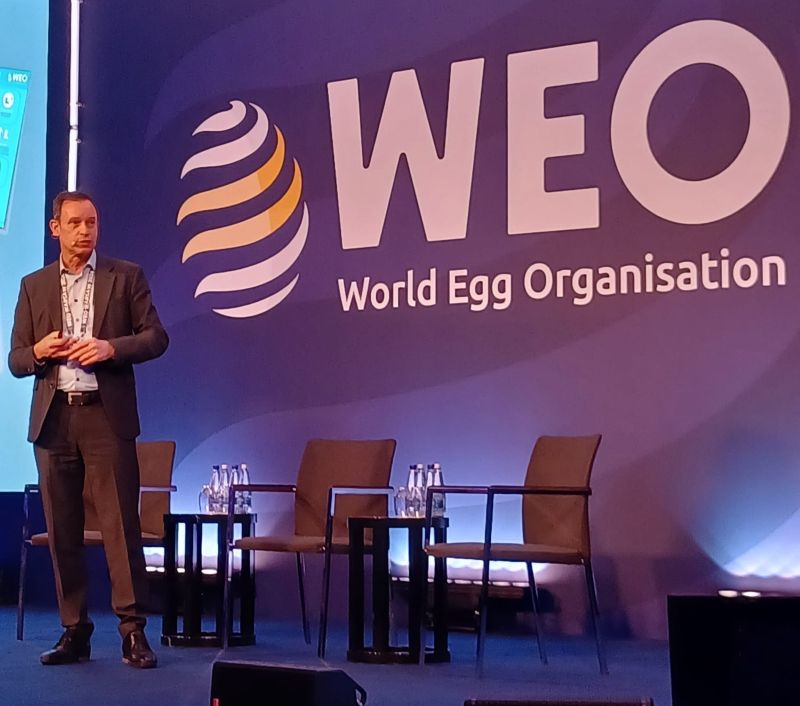 Speaking in Warsaw on the second day of the World Egg Conference, Ben Dellaert opened with a reminder that for all the progress made in understanding avian influenza, the industry is still dealing with a disease that has not been brought under control. As chair of the WEO Avian Influenza Global Expert Group, he reflected on a group that was originally intended to dissolve once the threat had passed. More than ten years on, that point has not been reached, and the continued need for that collaboration underlines how far the sector still has to go.The global picture he set out is no longer defined by isolated outbreaks or seasonal disruption. Instead, avian influenza has become embedded across multiple regions, with sustained presence in both poultry and wild bird populations. Maps covering 2025 through to early 2026 show repeated notifications across Europe, Asia and parts of the Americas, illustrating the persistence of the virus rather than any clear pattern of retreat.What has shifted most is the role of wild birds. The scale of infection within wild populations has increased sharply, creating a constant source of viral pressure. This has altered the traditional cycle of the disease. Peaks that were once expected later in the winter are now appearing earlier, often aligning with migratory movements, and the intensity of outbreaks has become less predictable. Mortality events in species such as swans and cranes highlight the visibility of the problem, but the underlying issue is the sustained circulation of virus across migratory routes.This point was picked up again during the Q and A session, where a question was raised on whether the increase in wild bird cases reflects improved monitoring or a genuine shift in the disease. In response, it was made clear that there is no indication this is simply a reporting issue. The increase is considered real, with the virus continuing to move between species in unpredictable ways. Recent seasons have seen significant impacts move from geese into cranes and other species, and there is no certainty about where pressure will fall next. The discussion highlighted the need for better tools to understand how the virus behaves in different species and how it moves through ecosystems, although this remains a complex area.For poultry systems, this has exposed the limits of existing controls. Biosecurity remains essential, but it is being applied against a background of far higher environmental exposure than it was designed for. In regions where production density overlaps with migratory pathways, the challenge becomes one of managing constant risk rather than preventing occasional incursions.
Ben Dellaert - The industry is still dealing with a disease that has not been brought under control
Within that context, vaccination has moved from a theoretical option to an active area of development and deployment. The World Egg Organisation has positioned it as an additional tool rather than a replacement for existing measures, working to accelerate its application in laying hens alongside established biosecurity and surveillance systems.The Netherlands provides one of the most structured examples of how that shift is being approached. Dellaert outlined a deliberate, phased strategy beginning with controlled experimental work. Field trials started in September 2023, focusing on small flocks of laying hens vaccinated under different protocols, including the use of boosters. The objective was not only to assess clinical protection but also to understand whether vaccination could reduce or block transmission.Four HPAI challenges were carried out during the production cycle, with early indications pointing towards strong protection and limited spread of virus within vaccinated groups. Full results are still due for publication, but the initial findings have been sufficient to support a move into pilot scale application.That next step began in 2025, with day old chicks vaccinated at the hatchery and followed them through into the production system. By mid year, those birds had been transferred into laying units, with eggs entering the domestic market under controlled logistical arrangements. The pilot has been conducted under strict surveillance in line with EU requirements, with particular attention paid to traceability and product flow.A key feature of the Dutch approach has been engagement with trading partners before implementation. Given the Netherlands’ export exposure, communication was carried out in advance to explain the system being introduced and to assess market response. Early indications suggest that this has been received positively, although the long term position on trade remains one of the main variables influencing wider adoption.
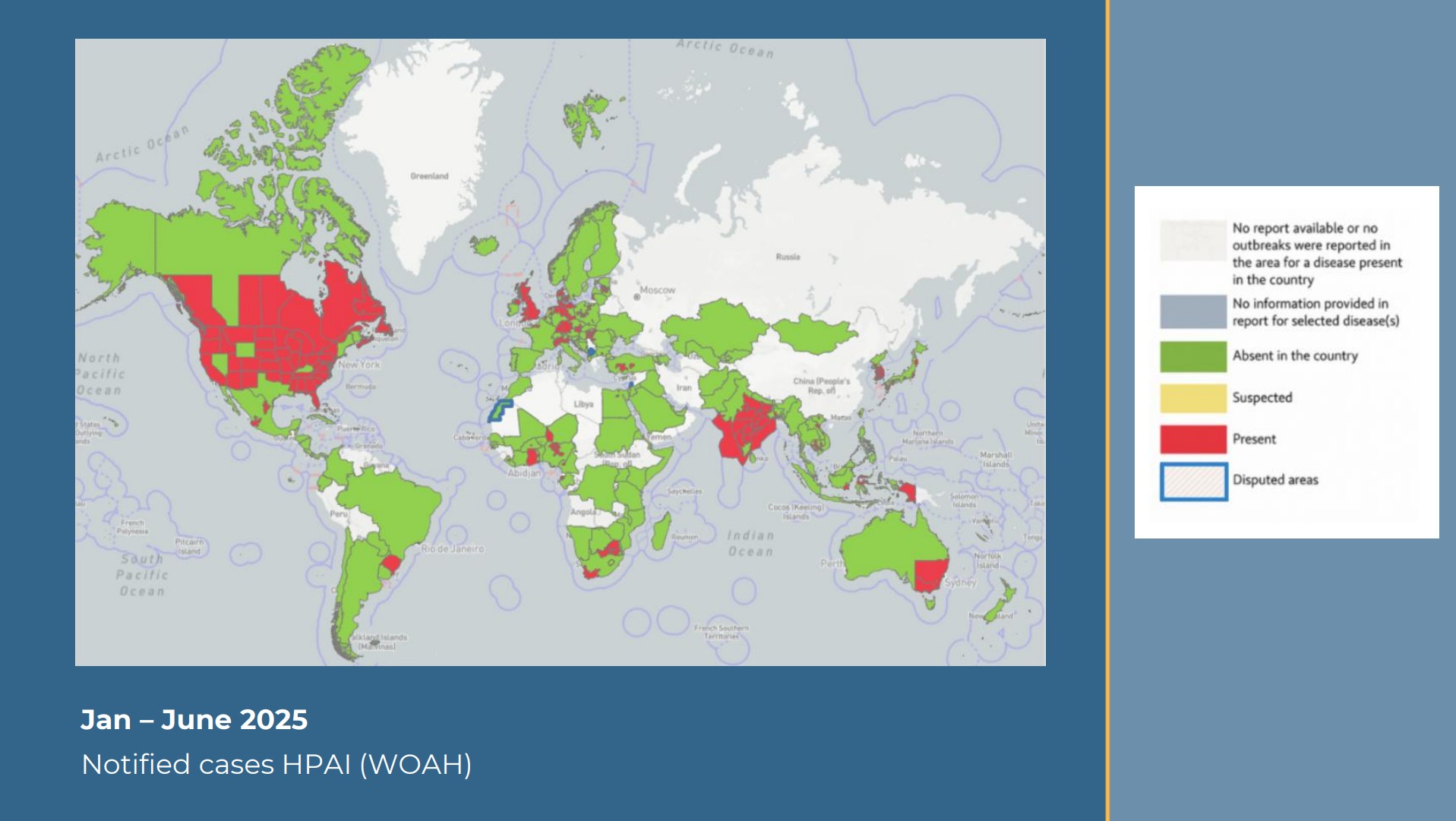
Jan - June 2025 WOAH
Elsewhere in Europe, progress has taken different forms. France has moved furthest in terms of large scale vaccination, particularly in duck production, where repeated outbreaks and the limits of stamping out policies led to a change in strategy. The introduction of mandatory vaccination has significantly reduced outbreak numbers and stabilised production, allowing the sector to move away from continuous crisis response.The French approach was also discussed further during the Q and A session, where questions focused on whether the vaccination strategy has changed and how costs are evolving. It was confirmed that the programme remains in place across all eligible duck flocks, with vaccination continuing at full coverage. However, the practical cost has increased in recent cycles due to the need for additional injections and the labour intensive nature of vaccinating ducks compared with other poultry species.The French experience also demonstrates the complexity of implementing vaccination at scale. The programme requires multiple injections, detailed monitoring, and a comprehensive surveillance system designed to confirm the absence of circulating virus. Costs are substantial, with vaccination and surveillance together representing a major ongoing investment for both industry and government.Regional variation within France has highlighted further practical challenges. Differences in farm density, flock size and vaccination timing have influenced outcomes, and adjustments such as the introduction of a third injection in ducks have been required to maintain protection over longer production cycles. The difficulty of maintaining immunity in certain species has become a central consideration in programme design.Further discussion in the Q and A highlighted how outbreaks are still being identified within vaccinated systems. In France, most detections have come through clinical observation rather than routine sampling, underlining the continued importance of passive surveillance based on mortality and bird health indicators alongside structured monitoring programmes.
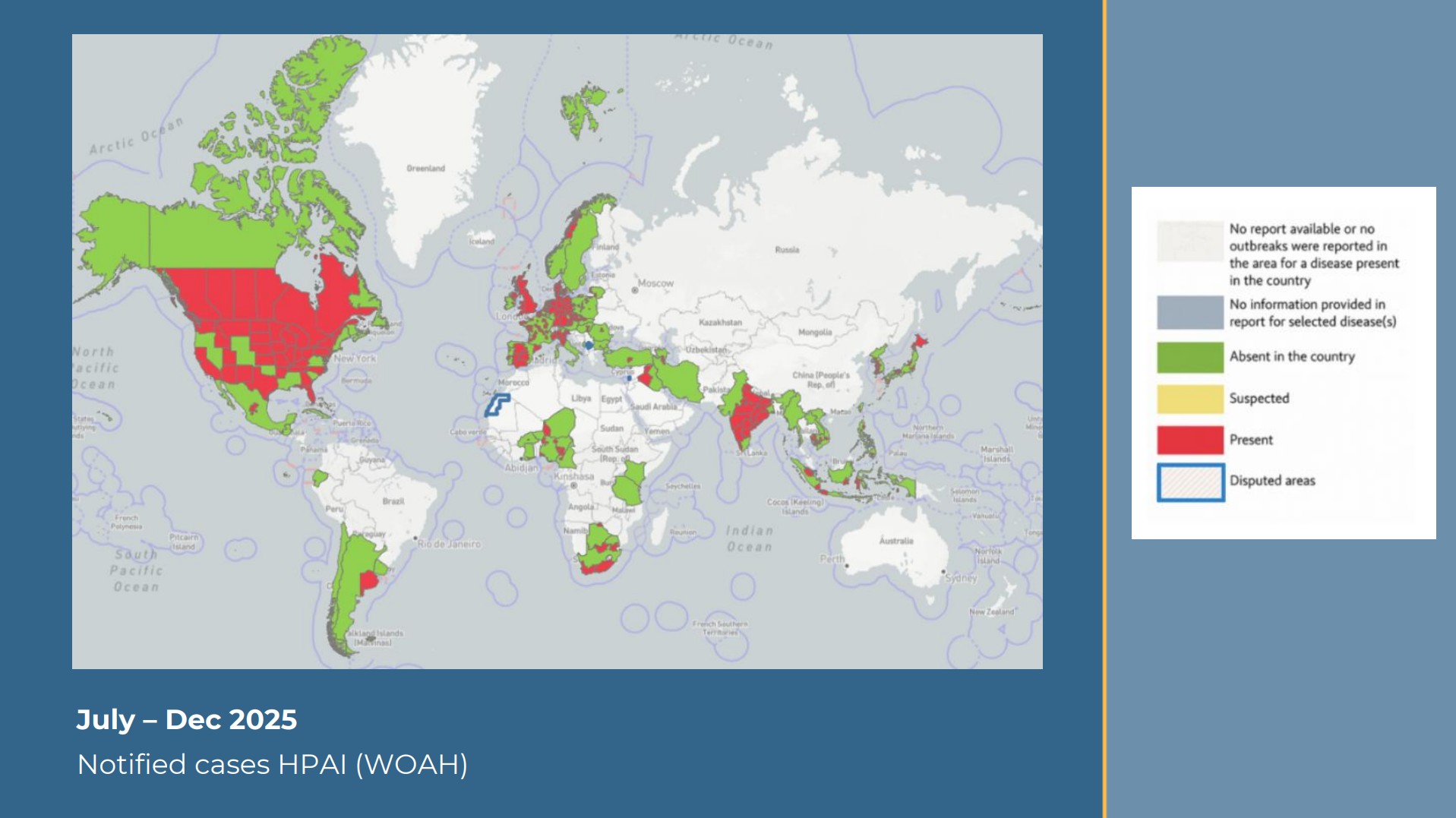
July - Dec 2025 - WOAH
The session also touched on production performance and consumer response. There is currently no clear evidence that HPAI vaccination has a significant negative impact on productivity, beyond the general stress associated with handling and vaccination procedures. Consumer reaction in France has been limited, with only occasional concerns raised, and overall acceptance described as manageable.Other European countries are moving more cautiously. Italy has explored regional vaccination approaches but encountered practical limitations, particularly around bird movement between regions. Denmark has indicated interest in vaccination for turkeys, while the UK has begun trials using vector based vaccines to assess both protection and transmission dynamics.At EU level, regulatory frameworks are evolving alongside these developments. Updates to surveillance requirements are intended to make vaccination programmes more practical, reducing the need for intensive sampling while maintaining confidence in disease detection. The balance between operational feasibility and market assurance is a recurring theme in these changes.Beyond Europe, the global picture remains uneven. Vaccination is already embedded in parts of Asia, where it has been used for many years as part of broader disease control strategies. China’s experience demonstrates its potential impact, particularly in reducing both poultry outbreaks and associated human cases when applied systematically against specific strains.In contrast, other regions are still at an earlier stage of adoption. Concerns around trade, cost and implementation continue to influence decision making, resulting in a fragmented landscape where different countries are applying different strategies under varying levels of disease pressure.
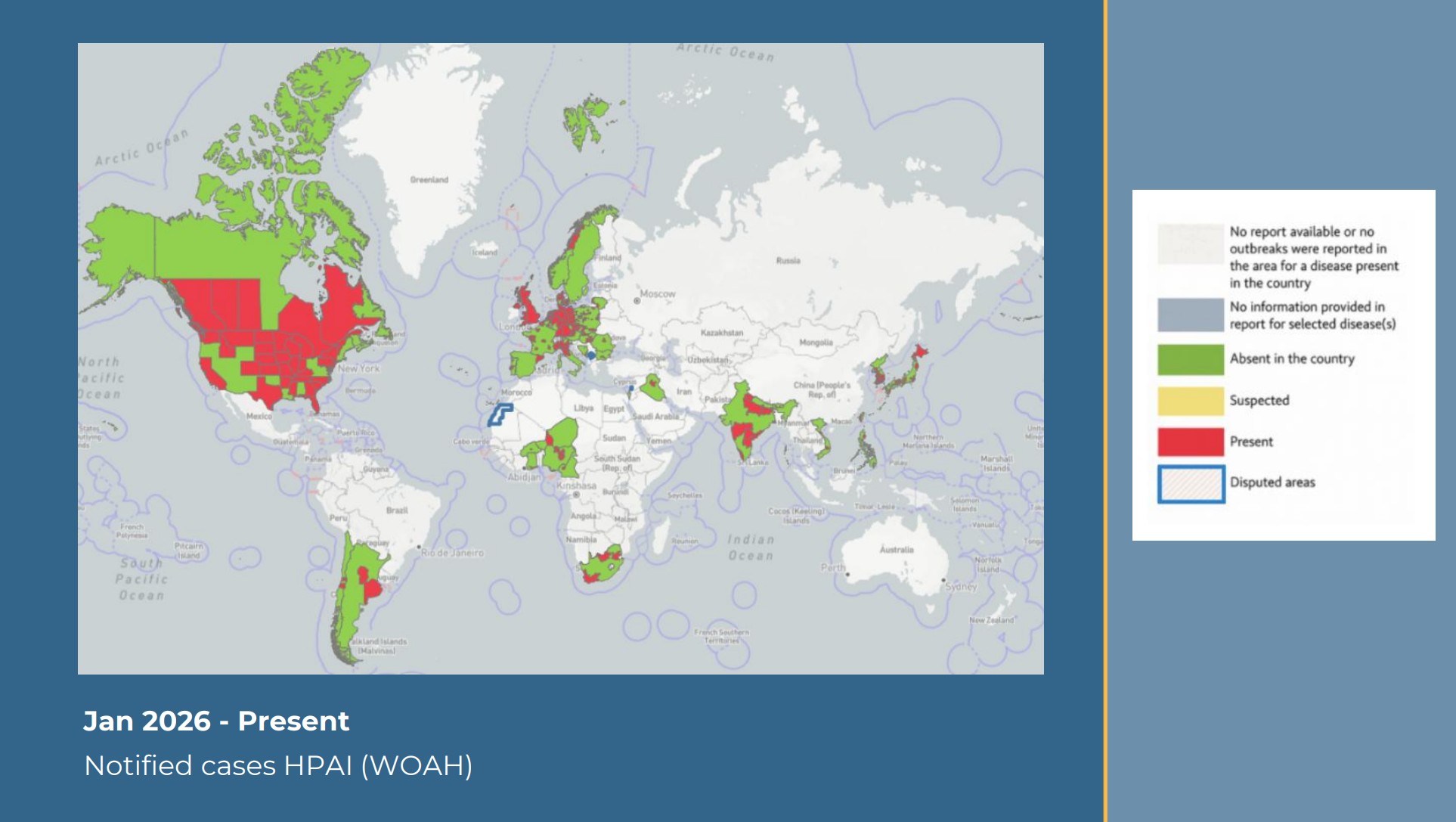
Jan to Present 2026 WOAH
This lack of alignment is one of the central issues now being addressed at international level. Work within the World Organisation for Animal Health is focused on developing guidance for surveillance and vaccination that can support more consistent approaches. At the same time, discussions within the World Trade Organization are aimed at reducing barriers associated with vaccinated poultry and egg products.Trade remains a defining factor in how vaccination is deployed. While some markets are beginning to accept products from vaccinated birds, particularly processed goods, access for raw product is still inconsistent. This creates a situation where technical capability is not the only constraint on adoption.Surveillance sits at the centre of this balance. Without credible monitoring systems, confidence in vaccinated production cannot be maintained, either domestically or internationally. As a result, surveillance design is evolving alongside vaccination strategies, with a focus on demonstrating freedom from circulating virus rather than simply detecting outbreaks.At the same time, research into new vaccine technologies continues. Current approaches, including vector vaccines, are being refined, while longer term work is exploring broader protection mechanisms that could reduce the need for frequent updates as the virus evolves. Although these developments are still in progress, they point towards a future where vaccination could become more flexible and potentially more widely applicable.For the UK and across Europe, the discussion in Warsaw reflects how quickly policy and industry thinking is shifting. What was, until recently, a debate about whether vaccination could be used has moved firmly into questions of how it is implemented, regulated and accepted in trade.The UK sits in a similar position to several other European producers: exposed to sustained wild bird pressure, heavily reliant on biosecurity, and operating within export markets that remain sensitive to any change in disease status. Trials now underway are part of a wider European shift rather than a standalone move, with France already operating at scale and the Netherlands progressing through pilot production systems.What becomes apparent from the Dutch and French experience is that vaccination cannot be treated as a simple add on. It brings with it surveillance requirements, logistics around administration, and the need for clear separation and traceability of product. In the Netherlands, this has meant strict control over where vaccinated eggs are marketed, alongside early engagement with trading partners before birds even entered production.At EU level, regulatory changes are now catching up with that reality. Proposed adjustments to surveillance requirements, moving away from blanket enhanced sampling towards more targeted systems, are designed to make vaccination workable at scale without removing confidence in disease monitoring.Trade remains the pressure point. While processed products are increasingly accepted, access for raw product is still inconsistent, with some markets remaining closed and others reopening gradually following negotiation. This continues to influence how quickly individual countries are prepared to move.Alongside this, the underlying disease pressure has not eased. Continued circulation in wild birds, earlier seasonal peaks and repeated outbreaks across multiple regions mean that the operating environment for producers has fundamentally changed from what it was a decade ago.In practical terms, producers and policymakers are now working through implementation rather than theory. Vaccine protocols, surveillance design, cost sharing and market access are being tested in live production systems, with outcomes feeding directly back into policy and commercial decision making.