

France must build 575 laying houses by 2035 as imports take a tenth of its market
Published on : 13 Sep 2026
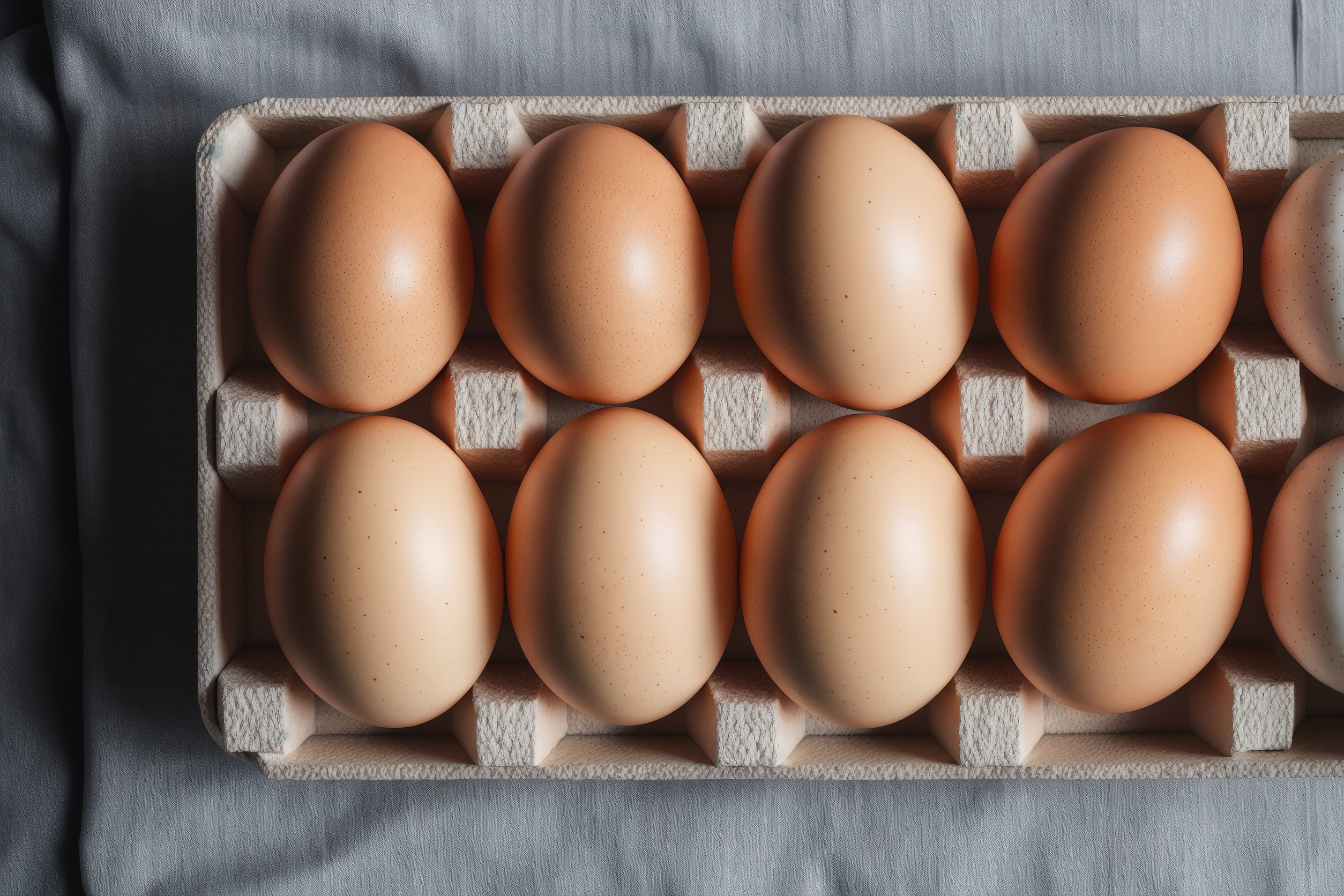 The French industry has raised its target to 10 million extra bird places, almost all of it barn and free range, whilst the fastest growing tier in its own retail market is imported cage egg.France must build 575 new laying houses and add 10 million bird places by 2035, at an investment of around €60 million a year, if it is to stop imported egg holding a permanent share of its market. The target comes from the CNPO, the French egg interprofession, and is a substantial increase on the 300 houses by 2030 set out in the sector’s Plan 2030, which was costed at €300 million.Ten million placesThe build is meant to lift French production from 15.9 billion eggs in 2025, or 957,000 tonnes shell egg equivalent, to 18 billion by 2035, which works out at roughly one million new bird places every year for a decade. Progress so far is well short of that. Eighteen houses were completed in 2025, giving 658,700 places and around 200 million eggs a year, and 40 houses are planned for 2026, giving 1.25 million places and around 375 million eggs. The CNPO says more than 220 projects are registered with an assured market outlet, and that it takes around two years to get from project to first egg.Those figures do not reconcile neatly. Ten million places across 575 houses implies an average house of around 17,400 birds, whilst the houses actually going up are averaging over 31,000 places in the 2026 programme. The likeliest explanation is that the 575 figure carries conversions of existing cage houses as well as new builds, but the CNPO has not said so.Consumption is driving itFrench consumption reached 237 eggs a head in 2025, up from 227 in 2024 and 15 per cent over three years, and the CNPO expects 269 by 2035. Simon Fourdin, who heads Itavi’s economics division, has put the trend at 35 more eggs per person each year over the past decade.Production has not kept pace, and self-sufficiency fell to 95.8 per cent in 2025 from 99.4 per cent the year before, leaving a trade deficit of 31,101 tonnes shell egg equivalent. Imports now stand at around 10 per cent of national production by volume, up 21 per cent over the first eleven months of 2025 and 42 per cent over two years, with Ukraine the principal EU supplier after a 59.4 per cent rise in its exports over ten months of 2025. The CNPO’s own position is that 100 per cent self-sufficiency would not be enough and that France needs 102 to 103 per cent before it can export again, so the building programme is import substitution and the interprofession says so openly.Barn and free rangeThe French flock at the end of 2025 was 77 per cent alternative, made up of 32 per cent plein air, 26 per cent barn, 13 per cent organic and 6 per cent Label Rouge, with 23 per cent still in cage. Plein air is free range on the same EU rules that apply here, at nine birds per square metre of usable area and four square metres of range a bird, and Label Rouge is free range under a stricter quality scheme, so free range accounts for 38 per cent of the French flock between them. France numbers its systems the other way round to the way most producers here would read them, with code 0 organic, code 1 free range, code 2 barn and code 3 cage. The Plan 2030 commits the sector to 90 per cent alternative by 2030, and the new capacity is going in as barn and free range rather than cage.Some of it is replacement rather than growth. Around seven million cage places are due to convert between 2027 and 2030, conversion runs at about €25 per bird place and takes roughly a fifth of a building’s capacity out when it is done, which is why the sector costed a million new places a year simply to stand still on volume.Thirty thousand birds a houseThe working unit behind the plan is a 30,000 bird barn house, and the sector’s own arithmetic has been framed as roughly 50 barns of 30,000 birds a year. A unit finished this summer in Côtes-d’Armor shows what that looks like. Emma Carfantan took a building of 15 metres by 80 metres, added 25 metres to its length and put in an aviary for 30,000 code 2 birds with a 583 square metre winter garden, at €57 per bird, or around €1.71 million, with the first flock going in under contract to Sanders after a ten month build. The CNPO’s own working figure of around €1 million a house sits some way below what that build actually cost.The 30,000 is a permitting number rather than a welfare one. Under the French ICPE regime a laying hen counts as one animal equivalent and the enregistrement regime bites above 30,000 places, so 30,000 birds is the largest house a producer can put up before moving into the heavier consenting process. It is the same logic that puts British units at 32,000, below the 40,000 places that trigger an environmental permit here, and the two are about to diverge, because the revised Industrial Emissions Directive takes the egg sector threshold down to 300 livestock units, or around 21,400 birds, from 2030, whilst Great Britain has not adopted the revision and stays at 40,000 places.Imported cage fills the gapThe difficulty is what is happening in the shops whilst the houses go up. Cage egg purchases in French retail rose 29.4 per cent year on year in June, the economy own-label tier rose 56.7 per cent, and cage lifted its share of retail volume from 14.2 per cent in January to 16 per cent in June, whilst organic fell 2.9 per cent over the first half and free range fell 0.6 per cent. Analyst Absis reckons a large part of that cage growth is imported egg taking shelf space as French supply falls short, and Itavi has shell egg imports up 24 per cent in the first half of 2026 at over 50,000 tonnes equivalent, a record that matches what France imported in a full year before 2022.Supply of everything else is tight, with organic and Label Rouge scarce through late summer after heat stress hit laying performance, barn demand running ahead of what French production can supply, and retailers favouring French cage egg over imported cage since the European salmonella cases. Yves-Marie Beaudet, CNPO president, said in February that shelf tensions would clear by June. They have not.SourcesCNPO press dossier, February 2026, "La consommation d’œufs bat des records : la filière appelle au soutien collectif pour accélérer la construction des poulaillers" — consumption per head, production volume, self-sufficiency, imports, henhouse numbers and places, and the flock breakdown by system.
Réussir volailles, 10 March 2026, "Près de 600 bâtiments de poules pondeuses à construire d’ici 2035" — the 575 house target, 10 million places, €60 per bird, build progress and Yves-Marie Beaudet.
Les Marchés by Réussir, 12 February 2026, "Œufs : les tensions dans les rayons vont disparaitre d’ici juin" — the 375 million extra eggs expected in 2026 and the Beaudet quotation.
Les Marchés by Réussir, 11 September 2026, "Retour fracassant des œufs de poules élevées en cage en GMS au deuxième trimestre 2026" — second quarter retail data, cage share, the Absis analysis and first-half import volumes.
Les Marchés by Réussir, 4 September 2026, "Des approvisionnements en œufs alternatifs très tendus" — scarcity of organic and Label Rouge after summer heat, barn demand, and the retailer switch to French cage egg.
Les Marchés by Réussir, 2 June 2026, "La production française d’œuf attendue en hausse de 5 % en 2026" — Itavi data, Simon Fourdin on consumption, flock share by system, and import and export trends.
Réussir volailles, 13 March 2025, "La filière œuf se prépare à la fin de la cage" — seven million cage places to convert, €25 per bird conversion cost, 20 per cent capacity loss, and 50 barns of 30,000 birds a year.
Réussir volailles, 10 September 2026, "Je m’installe en poules pondeuses avec un bâtiment agrandi" — the Côtes-d’Armor build, its dimensions, aviary specification and €57 per bird cost.
CNPO, "Plan 2030 de la filière française des œufs" — the 300 houses by 2030 target, €300 million investment and the 90 per cent alternative commitment.
AIDA/INERIS, ICPE rubrique 2111 "Volailles, gibier à plumes" — the animal equivalent conversion for laying hens and the 5,000 and 30,000 place thresholds.
Environment Agency, "Environmental Permitting Regulations (England and Wales)" — the 40,000 places for poultry threshold that triggers an intensive farming permit.
British Agriculture Bureau, December 2025, "EU tightens livestock emissions rules for pigs and poultry" — the revised Industrial Emissions Directive threshold of 300 livestock units, around 21,400 laying hens, applying from 2030.