
Farmers Challenge Tesco Chief on Prices, Imports and Long Term Supply
Published on : 25 Feb 2026
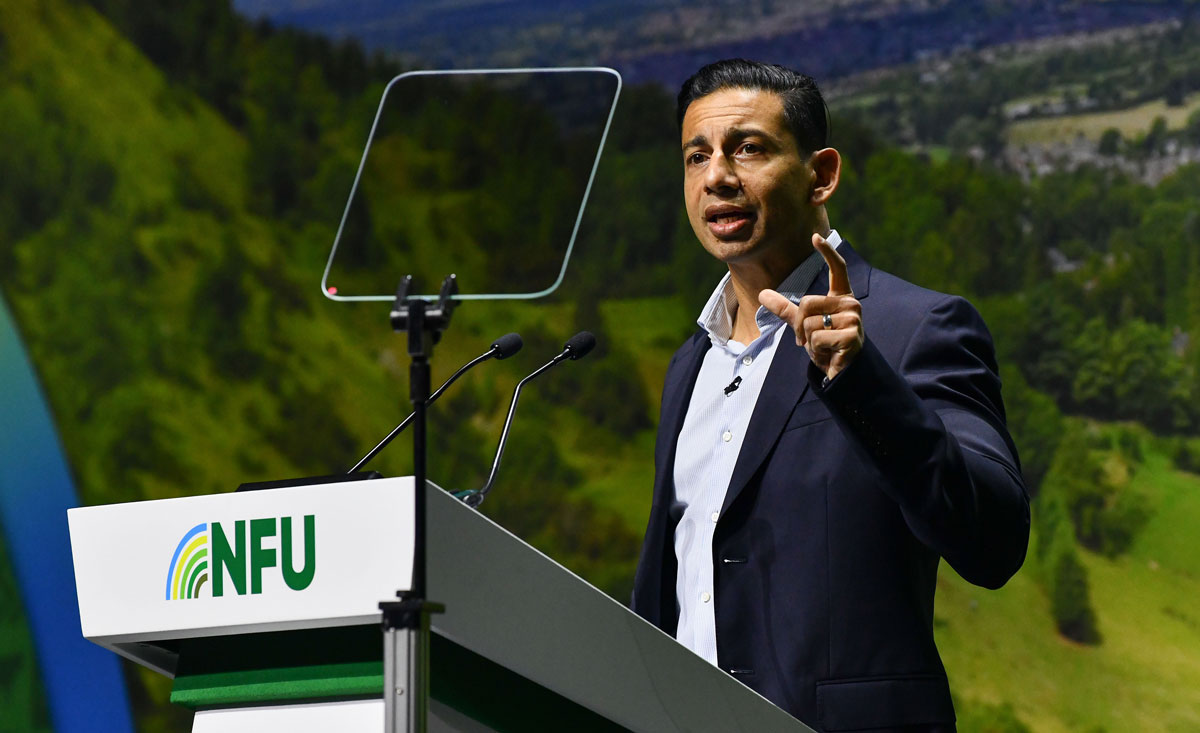
Tesco UK CEO Ashwin Prasad faced a robust and, at times, pointed grilling from farmers
Tesco UK CEO Ashwin Prasad faced sustained questioning from farmers at the NFU Conference 2026, as delegates pressed him on fair returns, long term contracts, import standards and whether retail is doing enough to safeguard the future of British food production.Tesco UK CEO Ashwin Prasad faced a robust and, at times, pointed grilling from farmers at the NFU Conference 2026, as questions from the floor quickly honed in on financial sustainability, long term contracts, import standards and the future of domestic food production.Chaired by NFU President Tom Bradshaw, the session followed Mr Prasad’s address on building resilience in the grocery supply chain. While he spoke of partnership, transparency and long term collaboration, it was the audience questions that brought into sharp focus the tension many farmers feel within the current food system.Balancing farm viability with consumer affordabilityOne of the first major questions tackled the volatility of the past five years. Farmers have faced huge swings in input costs driven by global disruption, not least the war in Ukraine, while food price inflation has at times approached 20 percent. The question posed was clear: how does Tesco balance the need for short term price rises to secure long term domestic supply, against pressure to keep food affordable for consumers?Mr Prasad acknowledged the difficulty of striking that balance. He stressed that cost pressures are felt by consumers as well as farmers and described retail as a “low margin, high volume” industry. However, he pointed to Tesco’s use of long term relationships and open book pricing models in fresh supply chains as the mechanism to manage volatility.“All of our fresh models are open book, clear and transparent, that recognise what the input costs are, and they’re responsive to those things,” he said, referencing feed, fuel and fertiliser. He maintained that such models are designed to give suppliers the certainty needed to invest for the future, arguing that farmers must be profitable if the system is to remain resilient.Calls for 20 year contractsAli Capper, chair of British Apples and Pears, asked when Tesco might offer 20 year contracts, similar to those reportedly available elsewhere in the sector, to underpin long term supply and investment.Mr Prasad said Tesco does offer long term contracts, though not typically for 20 years. He argued that in practice, Tesco’s supplier relationships often extend over decades, citing examples such as the 20 year partnership with Anglia Free Range, run by Harry Irwin and his family, and other relationships spanning 20 to 50 years. He noted he had awarded Mr Irwin an Outstanding Achievement Award in recognition of his commitment both to Tesco and the wider industry. While stopping short of promising 20 year written agreements, he reiterated his support for long term contracts in principle as a tool to give farmers confidence to invest.Is the retail model broken?Perhaps the most direct challenge came from Joe Stanley, Leicestershire farmer and outgoing chair of the NFU’s combinable crops board. He painted a stark picture: farmers receive less than 10 percent of the value of the food chain, more than one in three farm businesses lost money in 2024, and average returns on capital over the past decade have been negative.Mr Stanley questioned whether the retail sector’s “race to the bottom on price” was fundamentally broken and asked what it would take for retailers to accept that risk and cost cannot continue to sit primarily with farmers and growers.In response, Mr Prasad rejected the characterisation of Tesco’s model as a race to the bottom. He reiterated the company’s reliance on transparent, longer term pricing frameworks, arguing that they reflect input costs and aim to allow suppliers to make a fair return. He stressed that the cost of living crisis is real for shoppers too and that retail operates on tight margins, but maintained that Tesco’s sustainable farming groups are designed with financial sustainability at their heart.Imports and production standardsConcerns about unfair competition from imports featured prominently. One farmer highlighted that while Tesco promotes high standards in fresh British poultry, imported poultry can enter processed products without consumers necessarily knowing its origin or production standards.The question was whether Tesco would support the introduction of core production standards, ensuring all food sold in the UK meets the same standards as those required of British farmers.Mr Prasad said Tesco supports the principle of a level playing field and common standards. He pointed to certification schemes and the retailer’s call for standardised environmental data baselining as examples of backing consistent benchmarks across supply chains.Domestic production on a knife edgeMartin Brown, NFU Staffordshire county chair and a Tesco supplier, raised falling domestic production in cereals, red meat, poultry and vegetables, alongside trade deals that allow access for products not always produced to equivalent standards. He asked bluntly whether retailers are worried about the future supply of home produced food and what concrete steps they will take to address poor farm returns.Mr Prasad referred to Tesco’s Green Strengths for Farming report and its sustainable farming groups as evidence of efforts to support resilience, innovation and investment. He emphasised sourcing British first, stating that Tesco looks outside the UK only once domestic supply has been exhausted.When pressed on whether government truly understands how close domestic production is to the edge, Mr Prasad declined to criticise directly but admitted frustration at the pace of delivery on policy, particularly planning. Poultry was cited as a clear example where commitments to higher welfare and lower stocking densities are being undermined by slow planning approvals for new sheds, limiting domestic capacity and increasing reliance on imports in processed products. He referenced a recent roundtable with the Secretary of State where this issue had been raised directly.Fair dealing and regulatory powersThe discussion also touched on the Fair Dealing Obligations legislation in dairy and whether it is time to strengthen enforcement further, potentially by merging the Groceries Code Adjudicator with a broader supply chain regulator.Mr Prasad voiced strong support for the existing Groceries Code and its adjudicator, crediting it with improving retailer supplier relationships over the past decade. Tesco, he said, takes its responsibilities under the code seriously and would support its continuation.Net zero, data and investmentOn environmental policy, questions focused on the cost of transition and the risk of prioritising carbon targets over food production. Farmers stressed that while agriculture must reduce emissions, it cannot do so at the expense of output, and that large scale investment will be required.Mr Prasad said Tesco’s approach has been shaped by farmer feedback, focusing on practical, incremental improvements rather than slogans. He highlighted LEAF certification as a whole farm framework already adopted by more than 400 growers supplying Tesco, describing it as a detailed programme built on incremental gains across soil, biodiversity and resource use.He also pointed to Tesco’s low carbon concept farm in Lincolnshire, launched last July in partnership with Branston, TH Clements and Haygate. The ambition, he said, was to test how close field scale production could move towards net zero while remaining commercially viable. Fifty tonnes of broccoli grown using low carbon techniques were sold in store last year, and 500 tonnes of potatoes from the farm have recently gone on sale. Branston, he added, has developed a lower carbon growing recipe already cutting emissions by around two thirds compared with conventionally grown crops.The work, he suggested, is about de risking innovation for farmers by proving concepts at scale before wider rollout.Data was another central theme. Mr Prasad acknowledged farmer frustration at the patchwork of environmental data requirements and repeated Tesco’s call for a standardised national framework covering metrics such as soil health, biodiversity and carbon reduction. He said Tesco’s own soil and nature baselining programme, involving 360 beef and sheep farmers, keeps data ownership with the farmer, with Tesco only seeing anonymised and aggregated figures.Growth signals from the marketAlongside the challenge, Mr Prasad painted a picture of opportunity. In January, Tesco announced fresh food sales had risen by 6.6 percent year on year, building on similarly strong growth the previous year. He said demand for fresh, healthy British produce has never been stronger among customers.He highlighted Tesco being named British Apple Retailer of the Year, selling 34,000 tonnes of British apples in the past year alone. In dairy, he pointed to more than 200 percent growth over two years in products such as kefir, skyr and cottage cheese, reflecting a shift towards high protein and health led options.Throughout the session, the theme of partnership remained central to Mr Prasad’s responses. Yet the tone of the questions reflected a sector under intense financial and regulatory pressure, seeking firmer commitments on price, standards and long term security.As Tom Bradshaw concluded, resilience and financial sustainability cannot rest on warm words alone. For many in the hall, the test will be whether partnership translates into measurable improvement in farm returns, domestic production and long term confidence in the years ahead.