
Every egg now, every bird next: Artificial Intellegence comes to the shed
Published on : 29 Jun 2026
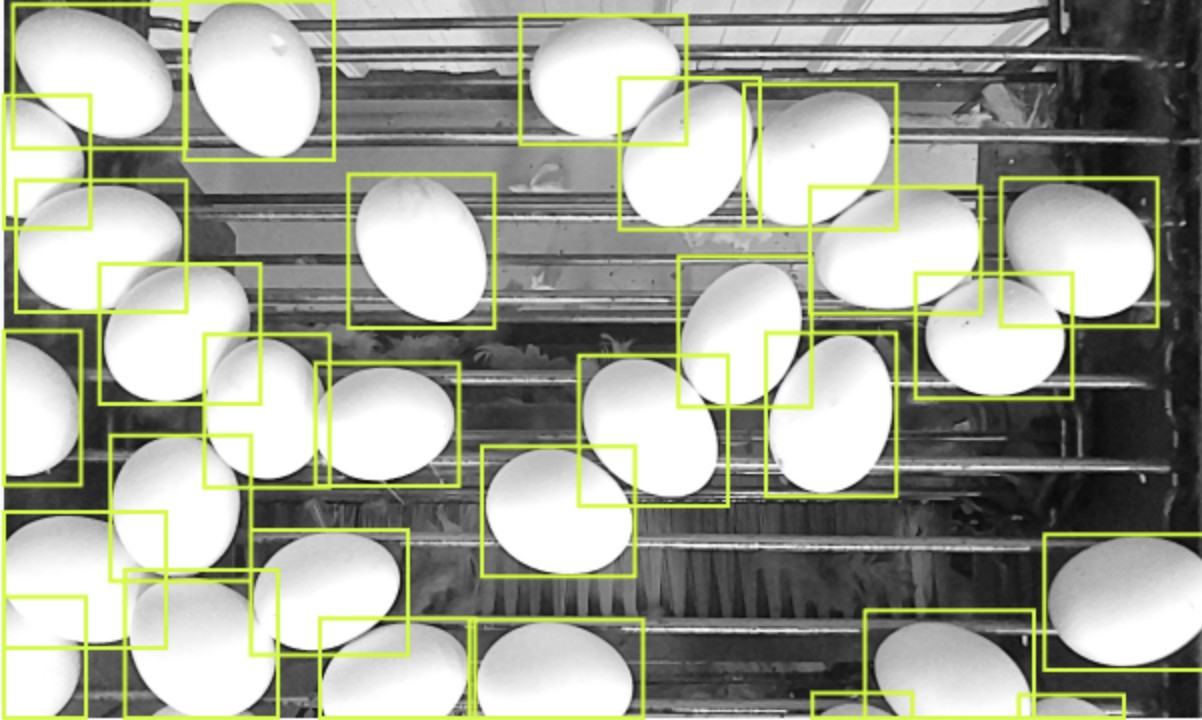
Every egg is scanned in real time with results instant
Vision AI, artificial intellegence, is coming to an egg belt near you, and the same cameras and microphones will soon be trained on the birds themselves. The Ranger reports on what it means for your shed, and whether the advantage stays with the producer or moves up the chain.BFREPA are currently implementing AI into their website, to help producers find the information they want on the bfrepa.co.uk site with ease. As we all know, AI is moving through our lives at pace, and free range is not immune. Tim Gordon, of Best Practice AI, told this year's NFU Conference in Birmingham how quickly it is already reaching the farm office, speeding up research, grant applications and paperwork. In fact, AI is transforming the way we produce eggs. The question is who has access to the data, and what they want to do with it. Let us first look at where AI is muscling into your shed.At the grading end: every egg, not a sampleYou know your house inside out: feed, water, temperature, ventilation, all of it tracked to the decimal point by your control system. The eggs are the one thing nobody has been able to watch the same way. Once they leave the belt they disappear into the system, and most of what you hear back comes from the packer days later, lumped together across houses, with none of the row-by-row detail that would tell you where to look first.That blind spot is what firms like bluecatchAI ( https://www.bluecatchai.com ) are going after. The Ranger spoke to its co-founder and chief commercial officer, Tom Goddard, about how the company's SmartShed system works. Small cameras sit above the egg belts you already have, wired to a little computer on the farm that picks out every egg as it passes and reads it there and then. The processing happens on the farm rather than in the cloud, so it copes happily with a poor broadband line, a mobile signal or even Starlink, and the cameras can be lifted and moved from one house to the next.What it reads goes well beyond a count: egg numbers, average weight, size and shape, and a long list of faults — dirty eggs, leaks, feathers, corrugated and mottled shells, calcium, changes in shell colour. All of it broken down by row, by house and by belt. It keeps an eye on the belt itself, too: how many eggs an hour are coming off it, how fast it is running and how far apart they sit. Two things set it apart from a simple counter. The first is that it doesn't stand still. It retrains on your own data, so before long it is, in effect, getting to know you, your eggs and your way of doing things, and tuning itself to your shed. The second is that it understands a laying cycle. As a flock ages the eggs get bigger and the shells get weaker, and the system shifts its benchmarks to match, so it isn't crying wolf every time something changes that you would have expected to change anyway.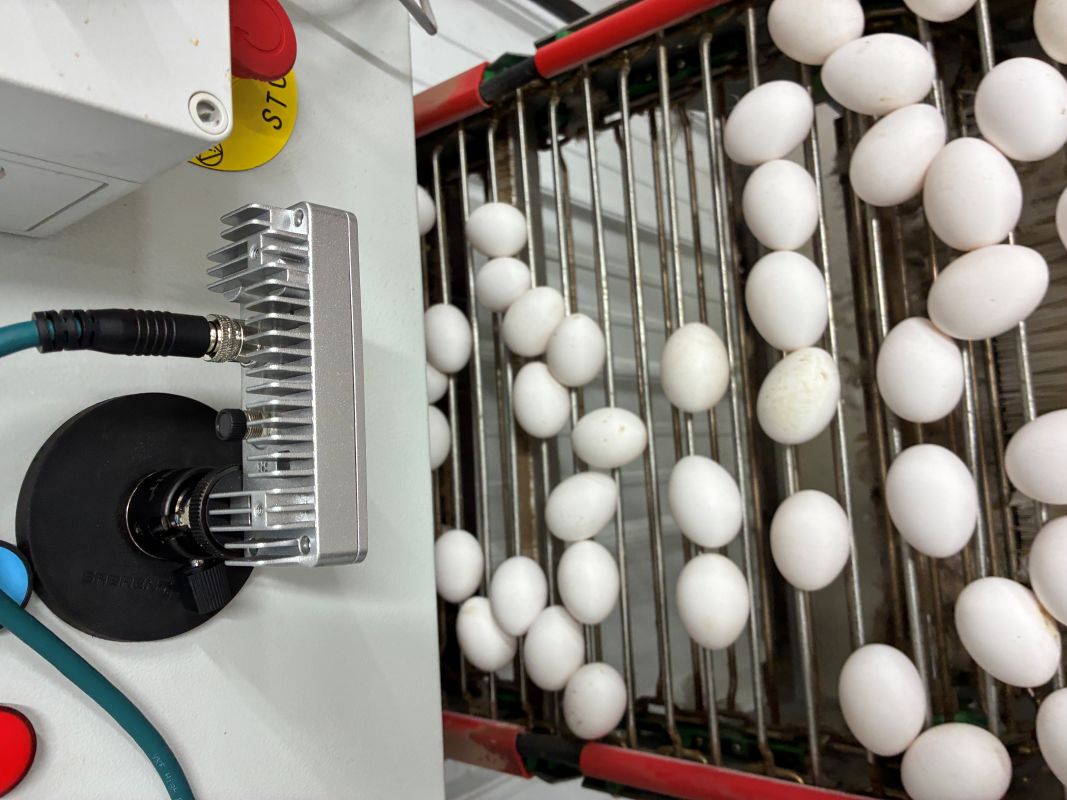
What it reads goes well beyond a count
What all of that turns into, day to day, is a single report, and The Ranger was shown an example. It opens not with a graph but with a plain-English summary and a short list of suggestions, the system's own read on how the flock is doing and what to watch, so you have the headline in half a minute, before you have studied a single chart. Then it works through the lot: egg count and laying percentage, average weight and the spread of sizes, egg shape and dimensions, even the lightness of the shell, each set against the flock's breed targets. A panel of the eggs flagged as irregular shows the actual photographs, speckled, mottled, stained, discoloured and feathered shells, sitting next to the percentage each one accounts for.It does not stop at the eggs, either. The same report carries the bird numbers and mortality, feed and water intake, feed conversion ratio and house temperatures, all against target, so the eggs sit right beside the conditions that produced them. The value is in that combination: not another standalone gauge, but the egg data and the house data on one page, read for you and put into plain words. The figures on any real report are the producer's own and stay confidential; it is the breadth of the thing, and how fast it reads, that tells the story.The accuracy figures, as you would expect, are eye-catching: 99.993 per cent on counting, and 99.8 per cent on weight, which the company reckons is no more than 0.12g out on a 62g egg. The more telling thing is where those figures land. Goddard says they sit neatly between the packer count, which tends to read a touch high, and the infrared counter, which reads a touch low, and come in a point or two ahead of the grading machines, simply because the counting is done back in the house rather than at the end of the line. These are bluecatchAI's own numbers, of course, and any producer would want to see them proven on his own belts before taking them as gospel. But how it is done is worth dwelling on. Today an egg is candled to check inside the shell and weighed on the grader to size it. Vision AI does the count, the weight and the size from a picture alone, never laying a finger on the egg; the weight, for one, is worked out from the length and width the camera measures off the shell. And it does it row by row in a way no machine at the end of the line can manage. Nor does it stop at the hen house door: next month I will look at how Moba is putting the same sort of AI into the big grading machines. Either way, every egg a camera reads is one fewer that needs a pair of eyes on it.Reading the flock off the eggAn egg tells you a good deal about the bird that laid it, which is where the welfare interest lies. Shell faults and flock health go hand in hand, and the company is blunt about it: the system watches for a spike in the trend so you can do something about it, whether that is tweaking the environment, changing the feed or picking up the phone to your vet. A run of dirty or feather-marked eggs can point to nest-box hygiene or bird behaviour at shed or row level; a jump in the nastier defects, corrugated or wrinkled shells, to something underlying that is worth chasing quickly. As Goddard puts it, no single measure holds all the answers, but egg quality often signals flock health, welfare and management problems long before they show anywhere else, a good fortnight, the firm reckons, before a shell-quality trend would surface in the packer's figures.
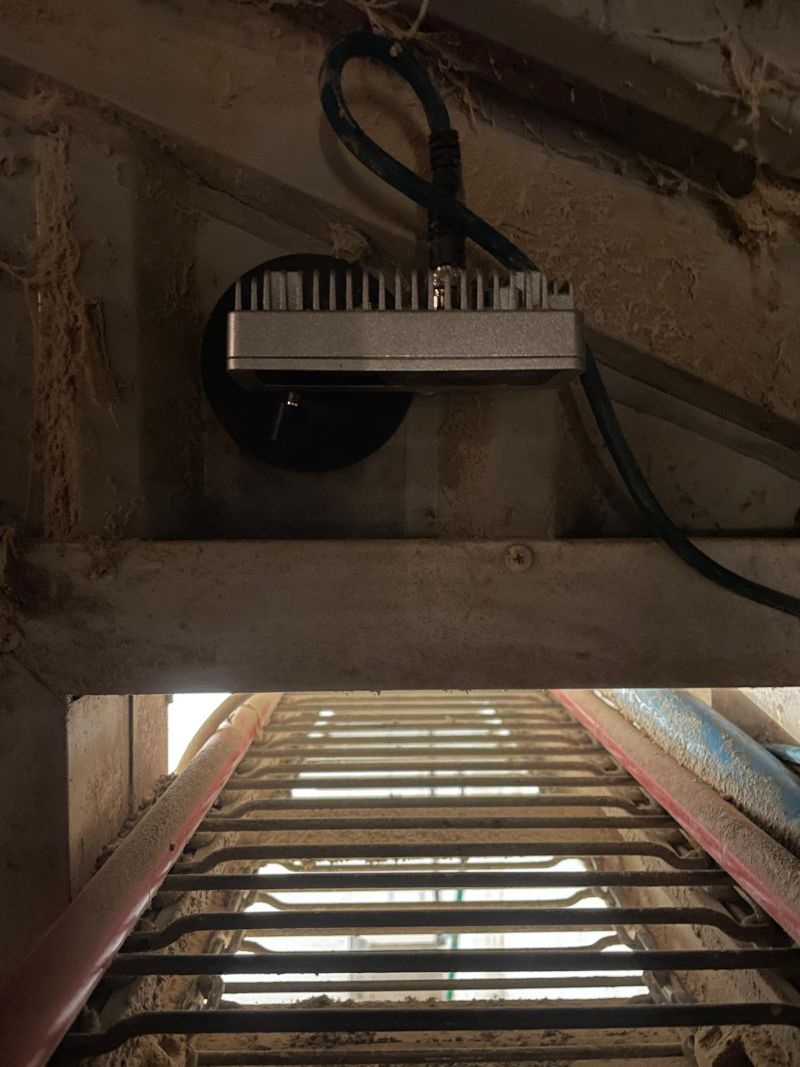
The accuracy figures, as you would expect, are eye-catching: 99.993 per cent on counting, and 99.8 per cent on weight
The examples bluecatchAI gives bear that out. In one flock in early lay, the eggs were coming through heavier than they should have been, and at the same time feather contamination on the belts was up. Put the two together and it looked as though the birds were getting ahead of themselves for that stage of lay, which was enough to start a conversation with the vet. In the recent hot weather, another producer could already see from his house controls that it was warm and that the birds had gone off their feed. What he could not see was the damage being done to the eggs. The system put a number on it: average weight down, mediums up 13 per cent, more discolouration, all inside three days, and it let him judge whether his changes to ventilation and feeding were actually pulling things back.The weight figures carry a use of their own. A hen's egg weight and her body weight move together, so on units where the birds are weighed only now and then, or not at all, Goddard suggests the continuous egg-weight data can stand in as an extra check on whether a flock is tracking where it should against its body-weight and production targets. And because far more eggs are weighed than birds ever are, the trend shows up sooner, and on a far bigger sample.The one I would keep an eye on, though, is still being developed: red mite, which leaves its mark on the shell as a scatter of tell-tale spots. It is a proper menace, on welfare and on output both, and finding it today means somebody going in and looking. A camera that reads those spots off the shell, day in day out, is taking on a job that currently eats up a producer's time. That tells you where this is all heading.Into the shed: cameras and microphonesAll of that, mind, is read off the egg. The real prize is the bird, and here I want to be straight with you: bluecatchAI is honest that watching the flock itself is still on its drawing board rather than out in the field. But the company is not shy about where it is going. The same kit, it says, could in time be pointed at how the birds behave, at feather cover, and at where they gather and how active they are. Monitoring distribution and activity is the sort of thing that could pick up piling and smothering, an event that can take out a corner of a house in minutes.The same goes for sound. Listening to a flock is part of where this is heading, and the science is already there: researchers have shown you can pick up respiratory disease in a flock from the birds' calls alone, with something like 97 per cent accuracy, and that a stressed bird and a contented one do not sound the same. A house fitted with ears as well as eyes would be one under watch around the clock, with nobody standing in it.
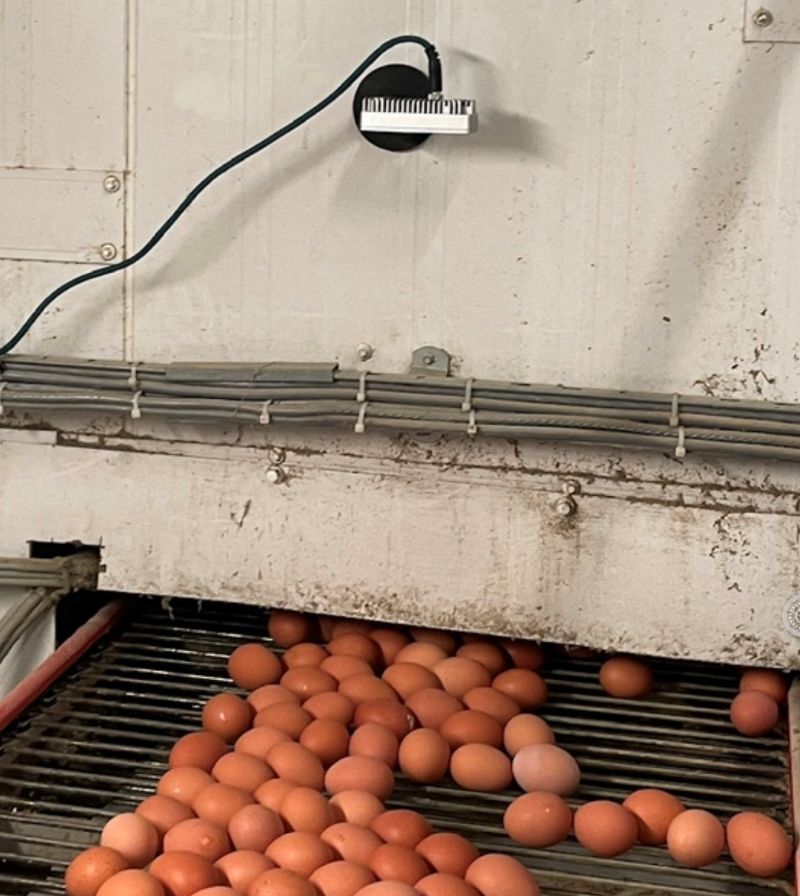
Every egg read at the grader and, before long, every bird watched by camera and microphone
Cameras reading every egg at one end and, in time, cameras and microphones reading the birds at the other: a round-the-clock watch over the whole operation, and a good deal less call for anyone to be trudging round the shed at three in the morning.Your data, and the bottom lineOne point that ought to go down well: bluecatchAI says the data is yours and yours alone, and that you decide who gets to see it, with the means built in to share it with your vet or your nutritionist if you choose. The firm also says its models were taught alongside farm managers, vets and poultry specialists, not cooked up in a lab somewhere. Given how jumpy the trade has become about who owns farm data and what they do with it, that is no small thing, and it answers the question I raised at the top.It is in commercial use on both sides of the Atlantic, too, on everything from 20,000-bird units to operations running into the millions of hens, and bluecatchAI will put a pilot on a farm for producers who want to see it work on their own belts first. What it is worth to you depends on the set-up. For an off-line producer it means rich row and house data every day, rather than waiting on the packer; for a big in-line operation it means the row-by-row detail the grader at the end of the line was never built to give.On the money, the firm points to a job in the United States comparing two near-identical houses of 30,000 birds, where the system turned up a feed-conversion gap worth something like 41 tonnes of feed, around $20,000, that the lumped-together figures had hidden entirely. On the same site, looking at egg sizes day by day flagged another $10,000 or so going begging. For a single house your size the sums will be smaller, but the lesson is the same: spot the drift early, and know which row is letting you down.So, does it replace the producer?The companies behind these systems are careful to say not. They talk about backing up good stockmanship rather than standing in for it, and there is truth in that. It was much the line Gordon took at that same conference, when the session turned to the part data and AI will play in resilient farming. Asked outright whether AI would replace farmers, his answer was no. What it will replace is certain tasks, the routine analysis and the paperwork, the jobs it can rattle through far faster than we can. AI, he said, has "absorbed vast quantities of research and data" but "has never walked a yard". It can think at speed, but it has none of the judgement a farmer earns standing in his own shed.AI will not lay a hand on the birds, nor take the decisions that really matter. What it does is make one capable person more capable still, soaking up the work that might otherwise have taken two or three. Set that beside what is now arriving in the shed, every egg read at the grader and, before long, every bird watched by camera and microphone, and the direction is plain enough. The producer who gets to grips with these tools will need fewer hands around him to do the same job, and probably a better one. The information that used to crawl up the line, late and second-hand, now turns up on its own and in real time.Which takes us back to where we came in: who holds that data, and what they mean to do with it. On the right terms, fitting a system like this is close to a no-brainer, so long as the advantage stays with the producer. The risk is the day it slips the other way, when what began as your own management tool becomes another compliance hurdle to clear, or one more report the retailer expects to see. The only thing left for you to decide is whether you will be the one reading it.