

Better light distribution can add 2% to egg production, WEO told
Published on : 24 Sep 2026
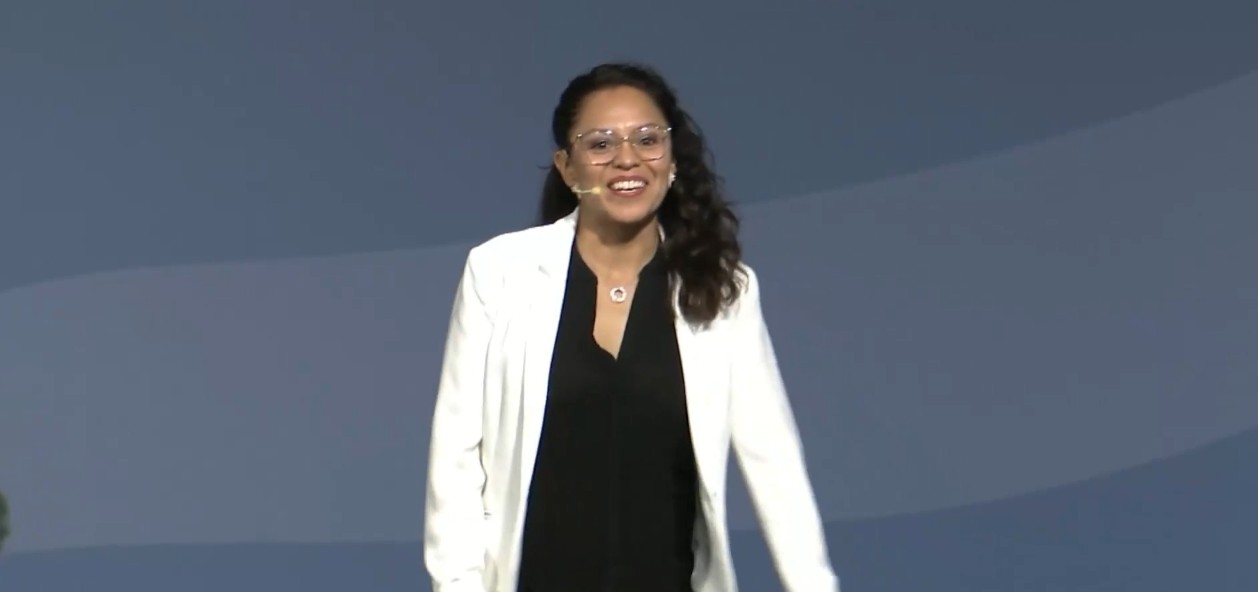
Cristabel Huerta of Dutch agricultural lighting firm HATO
Evening out the light across a house can lift egg production by up to 2 per cent, and precision LED lighting can halve the light intensity reaching birds closest to the fittings, Cristabel Huerta of Dutch agricultural lighting firm HATO told the World Egg Organisation's Global Leadership Conference in Singapore.Ms Huerta, a livestock lighting consultant with HATO, set out what she called the hidden powers of light in a session on welfare, behaviour and performance on 8 September. She said poultry react immediately to any change in the light environment, and that new technology is turning lighting into a precision management tool on farm.Light as part of climateShe said light should be managed as an essential part of the house climate alongside ventilation, nutrition, management and labour, and not treated as equipment that simply illuminates the barn. Even producers relying on natural daylight may need artificial lighting to support the photoperiod the genetics dictate, which is why the lighting programme sits within the climate control system.The first hidden power, she said, is that lighting sets the day and night cycle and so regulates the birds' circadian rhythm, the internal clock that tells them when to eat, rest and reproduce. That depends on dark hours for rest as much as on light hours. Correct photoperiod and adequate intensity from quality light improve both productivity and welfare, she said.How birds seeSight is the bird's most sensitive sense, and a house that looks well lit to the farmer is not necessarily perceived the same way by the hen, Ms Huerta said. Poultry are tetrachromatic and see a broader spectrum than humans, with four sensitivity peaks in the ultraviolet, blue, green and the yellow to red range, so under full sunlight they see a more colourful environment than people do.She described light as the steering wheel for managing behaviour and performance, because birds perceive it in two ways. Through the eye they get behavioural responses, finding their surroundings, feed and water. Through the skull, longer wavelengths stimulate the pineal gland and hypothalamus, driving biological responses including sexual maturity and laying performance. Likening this to a third eye, she said "even a completely blind hen will perceive seasonal light changes". Hens detect light below 4 lux and perceive changes in intensity above it, she said, and flicker may not be seen by the bird but can be perceived through the skull.She listed eight key aspects of lighting: spectrum, correlated colour temperature (CCT), colour rendering index (CRI), flicker, photoperiod, intensity, dimmability and distribution. Dimmable lights allow sunrise and sunset to be simulated, creating a more comfortable environment that improves vision and in turn performance.Quality of lightThe second hidden power is the quality of light. Incandescent bulbs, the original source in poultry houses, gave a broad spectrum with a strong red component that suited laying, but were weak in the blue that stimulates growth and activity in rear, Ms Huerta said.The industry moved to fluorescent lamps to cut costs, because incandescent bulbs were inefficient, broke often, did not stand up to humidity and ammonia and used a great deal of energy. But the switch took no account of what the new spectrum would do to bird behaviour. Fluorescent light cut power use but did not improve the birds' vision, and much of the research on poultry lighting followed from the behavioural problems that caused.LED is now the technology for livestock farms, with a longer lifetime and more light for less power, she said, but it should be precision lighting rather than traditional LED, simulating white light with a broad spectrum across the blue, green and red, with colours mixed within the same lamp. "So you don't need to add different lights or have a discotheque in the barn," she said, adding that what needs simulating is daylight, which is always white.Colour temperatureCool white, at around 5,000K, makes birds more active and inclined to eat and drink, improves growth in rear and reinforces muscles, but can increase unwanted behaviour if the flock is not followed closely, Ms Huerta said. She said the industry is moving towards automation and AI to identify those behaviours, since bad habits formed in rear can become a challenge in lay.Warm white, at around 3,000K, is the most recommended colour for laying houses because it keeps birds calmer, reduces activity where there is aggression, and carries more red to support sexual stimulation, laying and hatchability. Mixing the two to simulate daylight helps steer behaviour and improve productivity, she said.Monochromatic light is used only for specific interventions. In severe cannibalism a completely red environment camouflages the wounds and blood that attract pecking, while extending the red part of the spectrum can be used as a preventative tool against feather pecking. Blue light makes birds sit still, and she showed a video of a flock settling as the house switched from white to blue. The benefits are greater in broilers, she said, but blue light helps whenever birds are handled, including vaccination, placement and depopulation.Dynamic daylightA second video showed a house moving from amber-looking warm white to bluish cool white. Ms Huerta said warm white simulates sunrise and sunset, with the light becoming cooler through the day, which helps activate the flock and control behaviour. On the Kelvin scale sunrise and sunset sit at about 2,500K, a cloudy sky at 6,000K to 7,000K and a clear sky at 10,000K.HATO calls this dynamic daylight simulation, and it is being studied in the OMELETTE project, an Interreg North-West Europe collaboration on extending hen longevity. Research is "moving beyond the question of whether light matters, and we know it does," she said, to how lighting can become a more precise tool, taking in spectrum, colour, flicker-free lamps and colour quality as well as intensity and photoperiod. The project is examining how changing CCT through the day influences feed and water intake, nest-seeking, activity, welfare and egg production, with the aim of keeping hens longer without compromising welfare or farm sustainability. The approach has been used for years in the Nordic countries, she said, where short or absent daylight leaves flocks dependent on climate-controlled houses and producers have already seen behavioural changes from mixing cool and warm white.DistributionThe next hidden power is distribution, the right amount of light in the right area of the house. Intensity is normally measured in lux, but because poultry perceive light differently it should be measured in gallilux, and where the light lands matters as much as how much there is, Ms Huerta said. Good distribution draws birds to feeders, drinkers and feed trays, and multiple light zones in aviaries and floor systems give better use of the system and help avoid pecking and piling.She presented a HATO test in cage housing, which she noted remains popular in some regions. Traditional lighting gives very high intensity in the top tier and very low intensity in the bottom, while precision lighting cut the intensity closest to the cage by up to 50 per cent and raised the average.| Maximum lux (closest to cage) | Average lux | |
|---|---|---|
| Traditional lighting | 284 | 58 |
| Precision lighting | 152 | 68 |