

Air Management - An Overlooked Fundamental In Poultry Management?
Published on : 2 Jul 2026
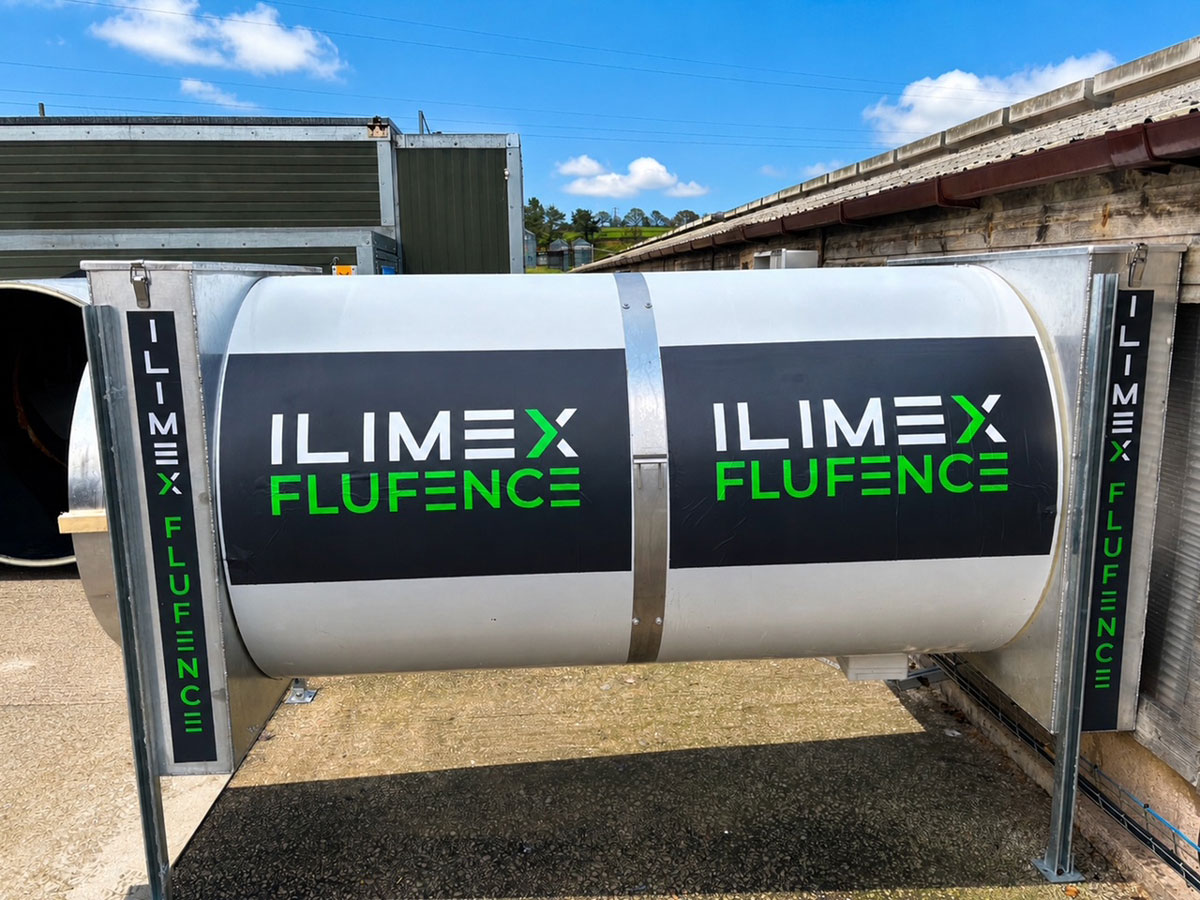
The Ilimex Flufence system
For decades, the poultry industry has demonstrated an extraordinary ability to innovate - embracing advances in genetics, nutrition, housing design, automation, welfare management and biosecurity to deliver safer, more efficient and more sustainable food production.Yet, despite these advances, poultry producers continue to face significant challenges:Disease outbreaks remain a persistent threat while producers are under pressure to reduce antibiotic usage. Sustainability targets are becoming more demanding. Consumers and retailers increasingly expect higher welfare standards. Despite a growth in demand, future expansion is becoming more difficult due to environmental constraints on planning applications.Against this backdrop, the industry may be overlooking one of the most fundamental determinants of flock health and environmental impacts -the quality of the air in poultry houses.The Forgotten FundamentalEvery poultry producer understands the importance of nutrition, and the topic of water quality receives constant attention as the bedrock of bird health. Ventilation is also recognised as an essential pillar of management, regulating temperature, humidity and airflow to create optimal conditions.Alongside these foundations sits biosecurity, with significant investment devoted to preventing pathogens from entering poultry houses through personnel, vehicles, equipment and other transmission routes.Together, these cornerstones form the basis of modern poultry management - yet there is another fundamental that receives far less attention: the microbial quality of the air circulating in poultry houses.While temperature, humidity and airflow are routinely monitored, the biological content of the air often remains largely uncontrolled. The thousands of litres birds breathe every day can contain viruses, bacteria, fungal spores, dust particles and other biological contaminants, each capable of negatively affecting flock health.Understanding the Airborne ChallengeThe poultry industry continues to contend with significant disease threats, including Avian Influenza and growing fears around Newcastle Disease, plus a range of endemic respiratory and production-related challenges.Traditional biosecurity programmes have, understandably, focused on keeping pathogens out, but outbreaks are frequently identified within the centre of flocks - not at entry points.Once pathogens are present within a poultry house, whether introduced externally or generated internally, a different challenge emerges. Birds themselves contribute to airborne microbial loads through normal biological processes. Dust generated from litter, feathers and feed can act as a vehicle for microorganisms.The Link Between Air Quality and Bird PerformanceThe relationship between environmental conditions and flock performance is well established. Research demonstrates that poor air quality can affect respiratory health, increase physiological stress and compromise overall welfare. When birds face ongoing environmental challenges, resources that might otherwise support growth and production are instead diverted towards immune response and recovery.By reducing airborne pathogen pressure and the associated immune challenge placed on birds, cleaner air may allow more nutrients and energy to be directed towards growth and production, contributing to improvements in overall flock performance and feed efficiency.This concept is particularly relevant in modern poultry production, where margins are increasingly influenced by incremental improvements in efficiency. A healthier growing environment does not simply reduce the risk of disease, it may also help create conditions in which birds are better able to achieve their genetic potential.Moving Beyond Air MovementVentilation systems are among the most important technologies in modern poultry production. However, ventilation systems are primarily designed to move air rather than manage its biological quality.The concept emerging from recent research is not simply air movement, but air management.Air management focuses on understanding and reducing the burden of harmful airborne biological contaminants within livestock environments. Rather than viewing air solely as a physical medium to be heated, cooled or circulated, it recognises air as a potential pathway through which pathogens may spread and persist.This shift in thinking represents a significant evolution in how management is approached within poultry production.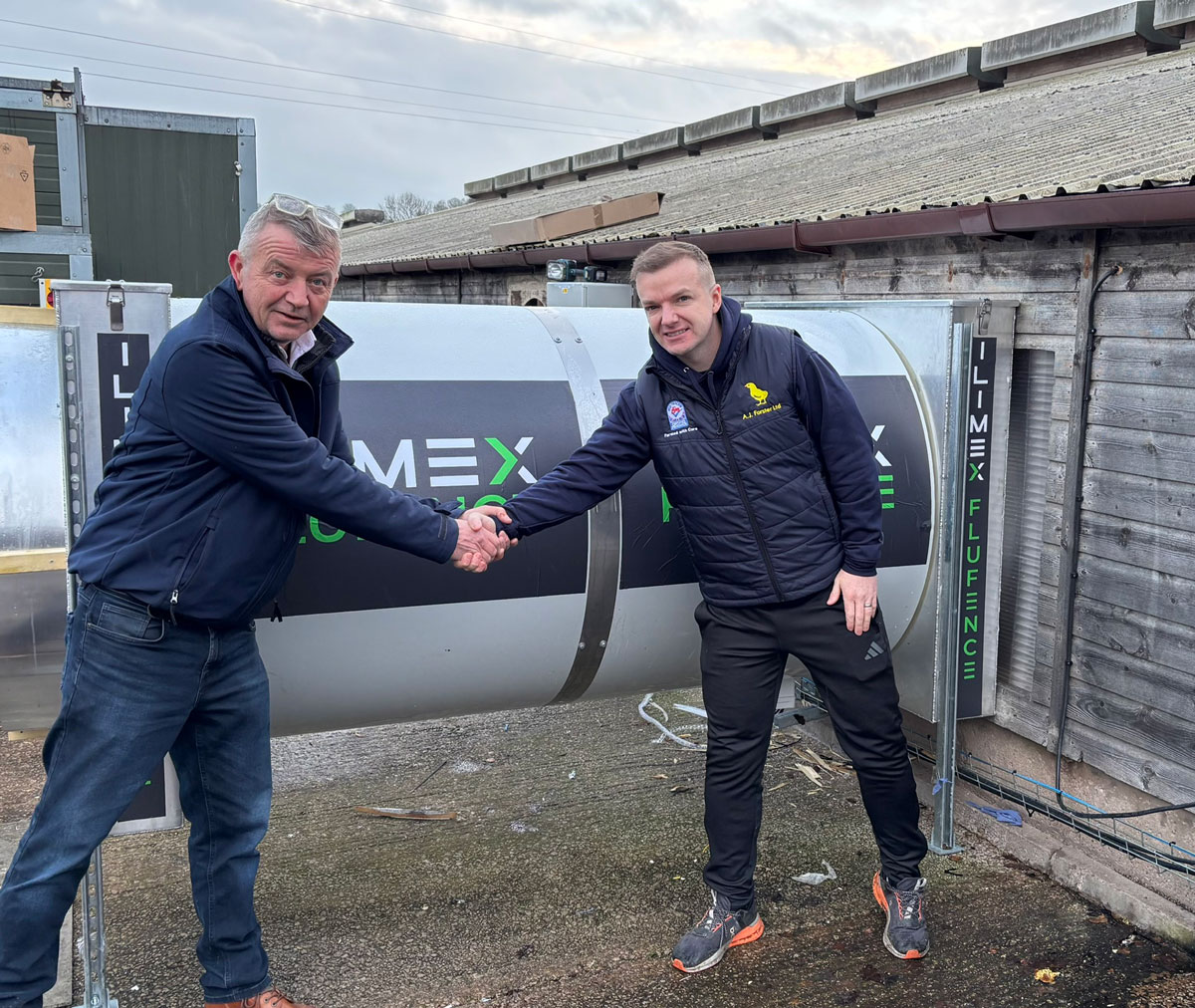
Gerry Corrigan of Ilimex with Chris Forster of AJ Forster Farms
Pioneering Air ManagementOne company helping to drive this conversation is ILIMEX, a specialist innovator focused on reducing the impact of airborne pathogens. ILIMEX delivers advanced air sterilisation and biosecurity solutions purpose-built for poultry and intensive agricultural environments. High-performance UV-C air-cleaning systems significantly reduce airborne pathogens at the point of transmission, helping strengthen biosecurity, improving bird survival by reducing mortality rates, improving weight outcomes, and strengthening flock resilience.Combining scientifically proven UV-C technology with patented engineering achieves measurable reductions in airborne microbial load beyond conventional filtration or ventilation. The system monitors real-time air quality data to support proactive disease management. The technology is trusted by respected independent organisations including the NIAS, Ulster University, Complement Genomics and AJ Forster’s.This technology represents a move from traditional air movement towards active air management. Laboratory testing has demonstrated up to a Log 6 reduction of MS2 bacteriophage, a recognised surrogate organism used in pathogen inactivation studies. These results were achieved under controlled laboratory conditions. They are not intended to imply equivalent performance within commercial poultry houses, where deployment, focuses on reducing airborne pathogen pressure and supporting healthier, more productive production environments.Importantly, this is not about creating sterile environments. Commercial poultry houses are complex biological ecosystems. Complete sterility is neither practical nor desirable. The objective is to reduce harmful airborne pathogen loads while supporting healthier, more balanced growing conditions.How Air Management Technology WorksAt the core of the Flufence system is ultraviolet-C (UV-C) technology operating at a wavelength of 254 nanometres.Air is continuously drawn through the system and exposed to high-intensity UV-C light. This exposure disrupts the DNA and RNA of microorganisms, preventing them from reproducing and infecting hosts. Unlike conventional filtration approaches that capture contaminants, UV-C technology actively inactivates viruses, bacteria and fungal spores as they pass through the treatment chamber.The process operates continuously throughout production cycles, addressing airborne contamination as it is generated. This distinction is important because airborne microbial loads within poultry houses are dynamic. They are constantly being created through bird activity, litter disturbance and normal production processes.Continuous treatment therefore offers a proactive means of reducing pathogen pressure within the environment.An On-going Programme of Commercial Trials The principle of air management and the Ilimex technology is supported by a significant body of laboratory validation, academic involvement and an ongoing programme of development and validation.In commercial broiler trials at AJ Forster Farms, two flocks demonstrated an absolute mortality reduction of approximately 0.5%, equivalent to around 110 additional birds surviving per flock. A third flock demonstrated a mortality reduction of 1.02%, equivalent to approximately 228 additional birds surviving.Importantly, these biological improvements translated into measurable commercial benefits. Based on flock performance and prevailing bird values, the producer recorded an estimated profit uplift of between 10% and 20%. In addition, a separate trial recently commenced at AJ Forster Farms. The internal recirculation units were installed and commissioned in the house during the week commencing 8 June, with birds being placed on 16 June.Sustainability Starts with EfficiencyNet-zero commitments, environmental reporting requirements and retailer sustainability programmes are increasingly influencing production decisions. But, the close relationship between environmental performance and biological efficiency is often overlooked.Even relatively small improvements in mortality and flock efficiency can have a significant impact on the environmental footprint of poultry production by increasing output from the same resource base.When mortality is reduced, fewer resources are wasted. When flock performance improves, feed utilisation becomes more effective. When production efficiency increases, the environmental impact associated with each kilogram of meat or dozen eggs can decline.By supporting lower mortality, improved productivity and more efficient resource utilisation, air management technologies may contribute to broader sustainability objectives while helping producers meet evolving environmental expectations.In this context, air quality becomes more than a welfare or biosecurity issue. It becomes part of the sustainability conversation.Responsible Antibiotic StewardshipReducing antibiotic dependence remains a major objective across global livestock production. Regulators, retailers and consumers increasingly expect preventative health strategies that minimise the need for reactive treatments while maintaining high standards of welfare. By contributing to healthier environmental conditions and lowering exposure to airborne biological contaminants, air management technologies can form part of a broader preventative health strategy.Future Proofing - Known and Unknown ThreatsBecause air management technologies target airborne biological contaminants broadly, rather than focusing on a single disease, they offer a potentially valuable layer of future proofing against both current and emerging threats.Today's concerns may centre on Avian Influenza, Newcastle Disease or other recognised pathogens. Tomorrow's challenges may look very different. Future disease pressures cannot always be predicted. What producers can do is invest in systems that improve resilience and reduce vulnerability.Former US Defence Secretary Donald Rumsfeld famously described the concept of “known unknowns” - risks we know exist, even if we cannot yet define them fully. The poultry industry faces a similar reality.The Next Evolution in Poultry Health ManagementFor generations, poultry production has been built on a clear understanding of the fundamentals. Feed quality, water quality, ventilation, lighting and biosecurity remain essential pillars of successful flock management. Research and field trails suggest it may be time to add another.Air quality has long been present in the conversation, but primarily through the lens of airflow, temperature and humidity. The next evolution is to consider the biological quality of that air.As disease pressures intensify, sustainability expectations rise and producers seek new ways to improve resilience, air management is increasingly emerging as a strategic opportunity.The future of poultry production will not be defined by a single technology. It will be shaped by a combination of innovations that help producers create healthier, more productive and more sustainable environments. Air management is set to become fundamental to that future.Further information is available at www.ilimex.co.uk