

Controlling rats and mice
Published on : 22 Dec 2021
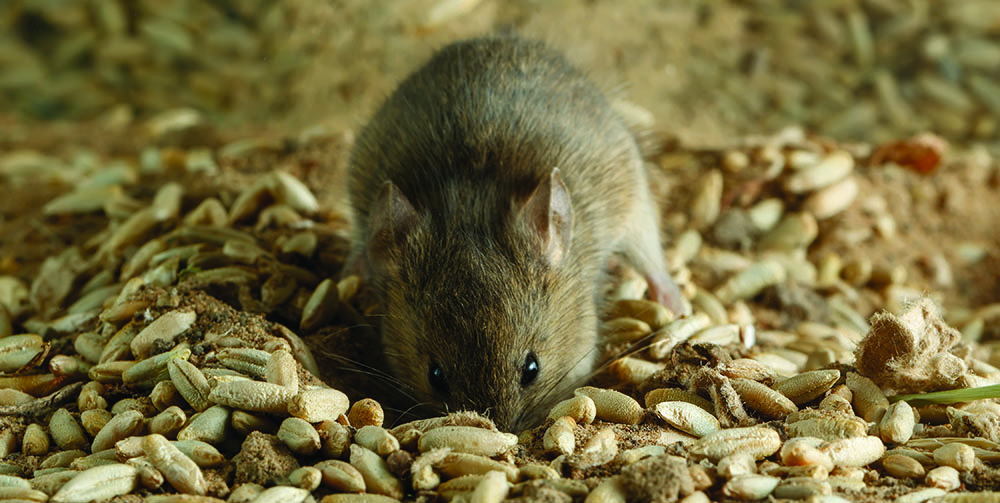
Preventing the potentially devastating consequences of rodent infestation on free range poultry units requires careful planning and early action combined with the use of effective rodenticides.
An integrated rodent management strategy should, of course, be based on the premise that ‘prevention is better than control’, as this will provide the best, most cost-effective long-term solution. However, where rodents cannot be prevented it is essential to control them quickly and efficiently.
Under the new regulations which came into law in April 2016, which affects all free-range poultry buildings, you have to prove that you have a problem before taking action, or that the risk of allowing a problem to develop poses such a risk that you have to go immediately to the control stage.
In theory, if you have a new free-range building then you should not bait immediately to prevent a problem from developing, as would have been the case in the past, but rather let it occur and then initiate control measures. However, every situation is different and it all comes down to a question of managing risk, so you need to know what actions are allowed and what are not. For example, if you have a proven rodent problem you then have just 42 days to clear up an infestation, or prove that it still exists.
Vigilance Required
Rodent control is fundamental to the efficient, profitable operation of any poultry unit. Unfortunately, poultry houses, whether on a conventional broiler/layer unit, or free range site act as a magnet for rodents by providing them with three fundamental requirements - a place to live, a source of food and access to water.
The months of autumn are particularly important for monitoring and controlling rodents. With harvest completed in surrounding fields, outside sources of food starting to dwindle and temperatures starting to drop, particularly at night, they are moving from fields and ditches to environments which offers food and shelter. This is a time to be extra-vigilant, because once established they will already have inflicted considerable physical and financial damage, while controlling them becomes more difficult, time consuming and expensive.
Just because you do not see rats or mice doesn’t mean that they are not there and even if you’ve only seen one or two there are likely to be hundreds on site. Rodents breed at a prolific rate and a single pair can quickly populate an area, so you have to kill a very high percentage to achieve effective control. That requires knowledge, skill and attention to detail, as the action which can be taken and the products allowed are now tightly regulated.
Producers will probably have insufficient knowledge or experience to spot the early signs of infestation and by the time they do it could be too late. Controlling rodents is such an important aspect of free-range production that if you don’t have the time or knowledge to do it yourself to a high standard then enlist the help of a professional pest controller with specialist knowledge of rural situations. An experienced pest controller who check sites frequently should be able to spot the signs of even a single or small number of rodents, allowing them to implement early, effective control measures using proven methods, correct techniques and fast-acting and effective products.
It is very difficult to get on top of a rodent infestation on a free range unit when your birds are still housed. Mice are the main problem in free range units as the sheds allow access during the day and at night the open feed tracks provide all the food they need to survive and thrive. It is therefore vital to use baits which are formulated to deal with infestations quickly and reliably.
Under the new regulations the first step is to put down monitoring bait to confirm the presence of rodents. Monitoring blocks or pastes, for example, are non-toxic and contain a substance that makes rodent urine glow under ultra-violet light, allowing much easier detection. If that yields positive results take action to control them immediately using proven methods, correct techniques and fast-acting bait.
Many cheap block-type baits are now ineffective so it is vital to use one of the new-generation products that are highly palatable and which rodents will want to consume in preference to the food which they have readily available. To ensure that they consume a lethal dose select one of the latest grain or pasta-based products which are appealing, fast-acting and highly effective.
Under the new regulations a paste-style Bromadiolone-type bait, such as Lodi Jade, is ideal as it contains mulched cereals and peanut butter oils to encourage consumption. A Difenacoum-based product containing peanut oils, is proven in the most difficult environments while a Brodifacoum-based bait formulated from premium grade cereals and peanut butter oil, will kill rodents in a single feed.
Spotting the early signs
The early signs of rodents often go unnoticed to the untrained eye and by the time they become obvious numbers are high. Don’t wait for a problem to develop before investigating. Monitor the site frequently for early signs of activity, minimise its attractiveness to rodents and reduce its ability to support large populations.
Here are some of the points to consider.
• Rats and mice are quite different in terms of lifestyle and activity. Rats generally live outside in burrows and only venture indoors in search of food, whereas mice often live entirely indoors. They will be your main adversary.
• Continually monitor for signs of activity, such as droppings, urine, rub and tail marks, tracks and damage to the fabric of buildings caused by gnawing. If more than a few are present you should be able to smell them.
• Clear up any food spills around feed bins, although there’s nothing you can do to stop poultry from spilling feed as they eat, which makes the job more difficult. The moisture and oils in feed will keep mice hydrated, but they will like to supplement this with water from drinkers, while broken eggs provide a source of food and liquid.
• Keep the area around buildings clear of vegetation and clutter. This will act deter rodents due to the risk of predation and allow you to spot signs of activity more easily.
• Free range hens will keep the length of the grass to a low level, but if there are places around the houses where this is not happening then it should be cut, as long grass attracts rodents and helps bacteria and viruses to survive.
• Ideally, the area surrounding the free-range poultry houses should have an area that is at least 2m wide which is not grass, such as gravel, bark chippings or similar material.
• It is virtually impossible to make a poultry house totally rodent-proof, but regardless of how well it is constructed it provides an open door during the day.
• Shut pop holes as soon as it gets dark and the birds are inside – the lights in the shed will deter rats, but not mice
• Outside, bait containers should be positioned adjacent to walls some time before baiting begins so they become familiar. Inside, secure bait boxes should be located where there are signs of activity, or rodents are likely to track. Check, and re-fill, them until fresh activity ceases and your rodent problem has been contained.
• Burrow baiting is very effective against rats and reduces the risk to non-target species. However, you must follow the ‘little and often’ principle and be able to retrieve unconsumed bait.
Finally
At turnaround, you really have to take fast, effective action to clear up rodents. The race is on from the time the previous flock leaves and throughout the two weeks before the new birds come in. As soon as the buildings are empty put bait stations wherever there are signs of activity. Ideally, you don’t want rodents to leave the building, but that’s unrealistic, because when they are cleared of muck and the cleaners move in rodents will run for cover, heading anywhere that provides refuge.
To be effective you have to kill 90%-95% of the rodent population indoors and the remainder outside using strategically sited bait stations. This necessitates the use of products that will work quickly, reliably and effectively, so I would suggest a past-type bait such as Lodi’s Ruby, a Difenacoum-based product containing peanut oils which is proven in the most difficult environments. This should be followed by Lodi Sapphire, a Brodifacoum-based bait formulated from premium grade cereals and peanut butter oil, which will kill rodents in a single feed.
Keeping on top of rodent populations can be done, but requires constant monitoring, sustained effort and highly-effective products.